 FN
FNFireman(FN Navy Rating)
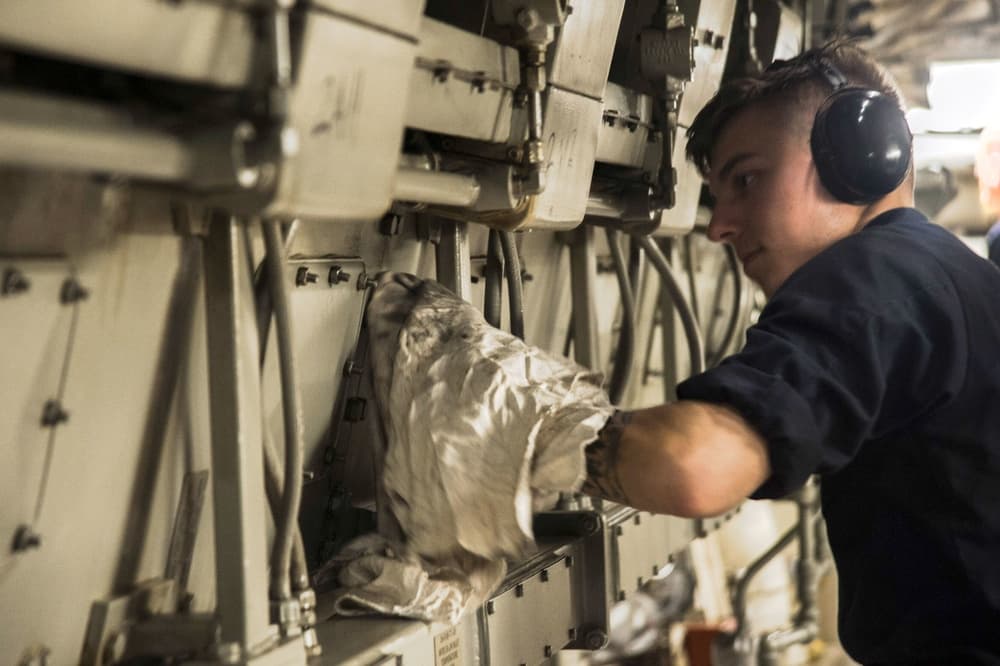
Undesignated fireman apprentice working in engineering divisions while awaiting rating assignment.
PACT (Professional Apprenticeship Career Track) — Engineering. Fireman Apprentice (FN) is an undesignated Sailor working in engineering divisions aboard ships while awaiting permanent rating assignment.
Overall
What is PACT?
The Professional Apprenticeship Career Track (PACT) is a program where Sailors enlist into the Navy without a guaranteed rating. After boot camp, they report to an engineering division as an undesignated apprentice, typically standing watch in the engine room or auxiliary spaces. At roughly the 18-to-24-month mark they can apply for a permanent rating through (a) the "A-School" path or (b) on-the-job strike path. See the striking for a rate article. PACT is riskier than a rated contract — conversion is not guaranteed.
Ratings FN can convert into
Quick Stats
- ✓Normal color perception
- ✓Normal hearing
Security Clearance
No Clearance — Open to Permanent Residents
This rate does not require a security clearance and is open to lawful permanent residents (green card holders) as well as U.S. citizens.
ASVAB Requirements
AFQT Minimum
35
No rate-specific line-score combo applies to FN. Apprentice rates only need the Navy's minimum AFQT. Rate-specific ASVAB line scores come into play when you PACT-convert into a designated rating — those line-score requirements are set by the target rate, not the apprenticeship.
Who This Is Best For
Best for undecided individuals who want to explore engineering ratings before committing. Broad exposure to electrical, mechanical, damage control, and propulsion helps you make an informed choice. Advancement is slower until you strike, but the hands-on experience across multiple shops is valuable for finding your fit.
+Pros
- ✓Strong civilian career transition
–Cons
- ✗Significant sea duty
Real Opinions
+Positive
“I would recommend FN to anyone considering it. The training is solid and the community takes care of its own.”
“I picked E-PACT and it's been nothing but good for me. The Navy has given me the opportunity to learn about this equipment. At the end of the day, it's hard work. But once you get it done, it pays off.”
–Negative & Mixed
“Being undesignated means you do whatever needs doing. You have little control over your day-to-day until you strike a rate.”
“Engineering sucks whether you're PACT or not. When I was undesignated I worked in R-division and knew that I didn't want to be a turd chaser. Being the lowest in engineering means the worst watches, the worst hours, and the dirtiest jobs nobody else wants to do.”
Page 1 of 3
Share your opinion about FN
0 charsRecruiter vs Reality
What the recruiter says vs. what it's actually like.
🫡 Recruiter says
“Going undesignated lets you try different jobs before committing to one!”
💀 Reality
Source: MyNavyRates researchBeing undesignated means you will likely do the jobs nobody else wants until you strike a rate. You have less control over your career path and may wait months to get into A-school.
🫡 Recruiter says
“FN can strike for any engineering rate.”
💀 Reality
Source: veteran feedbackYou can request to strike, but availability depends on the ship's manning needs and your ASVAB scores. If the ship needs GS but you want ET, you may not get your first choice. Openings are not guaranteed.
Page 1 of 6
Horror Stories
Real stories people have shared about this rate. Swipe to browse.
“I went 72 hours without sleep doing repairs in the engine room during a casualty. Nobody cared that I was hallucinating. The chief said sleep when you're dead. Undes firemen get the worst watch rotations because they're the most expendable bodies in engineering.”
Story 1 of 5
Share a horror story about FN
0 charsRelated Reading
Guides on picking a rate, ASVAB, bonuses, promotion, and life after the Navy.
Getting Started
How do you choose the right Navy rate for you?
Choosing a Navy rate means weighing your ASVAB scores, lifestyle preferences, civilian career goals, and willingness to deploy or go to sea. Start by identifying which ratings you qualify for, then narrow the list by what matters most to you.
Getting Started
What is the ASVAB and what scores do you need?
The ASVAB is a multi-aptitude test that determines which Navy ratings you qualify for. Your sub-test scores combine into line scores, and each rating has minimum line-score requirements. Higher scores open more options.
Career & Pay
Which Navy rates have the biggest enlistment bonuses in 2026?
Active Component (Active Duty) only. Per the CNRC GENADMIN dated 24 July 2026, the biggest source-rate bonus is $40,000 — Nuclear Field on FY26 ship dates ($75,000 EB cap). Special Warfare Boat Operator (SB) follows at $35,000, then EOD and SEAL (SO) at $30,000, and Aviation Rescue Swimmer (AIRR) and Cryptologic Technician Maintenance (CTM) at $25,000. Special Operations Future Sailors who clear the elevated PST standards add a flat $20,000 EBPST. Most rates cap at $50,000 total EB. The Loan Repayment Program adds up to $65,000 on top, separately. Reserve component (SELRES) bonuses are governed by a different message and are not covered here.