 DC
DCDamage Controlman(DC Navy Rating)
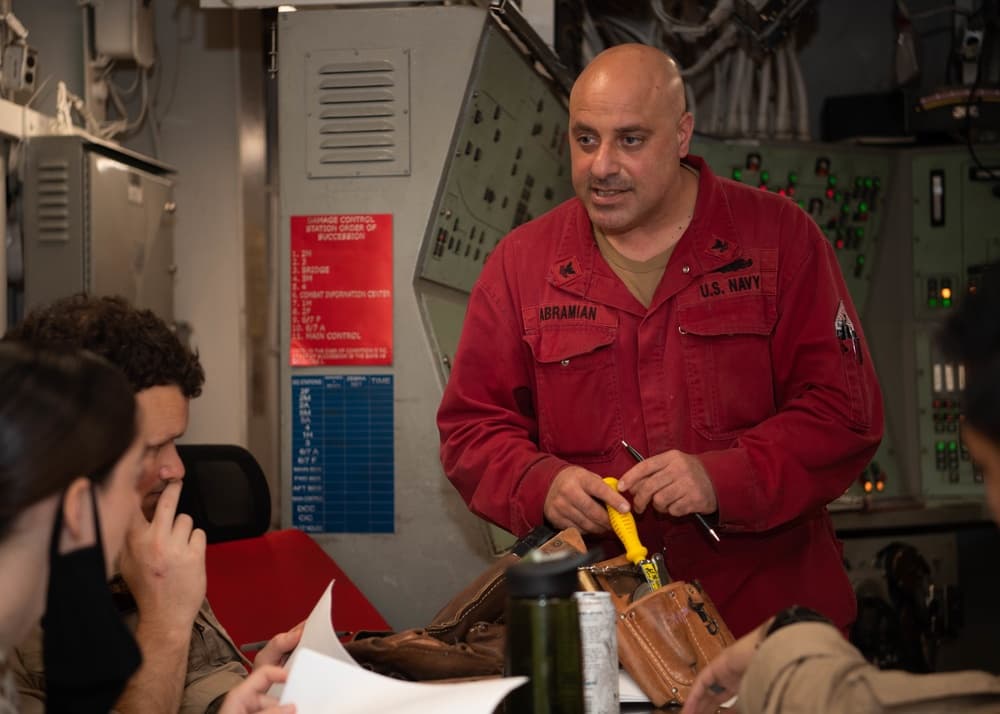
Damage Controlmen are responsible for firefighting, damage control, and chemical/biological/radiological defense aboard ships. They maintain firefighting equipment and train the crew in emergency procedures.
Overall
Quick Stats
- ✓Normal color perception
- ✓No speech impediment
Security Clearance
No Clearance — Open to Permanent Residents
This rate does not require a security clearance and is open to lawful permanent residents (green card holders) as well as U.S. citizens.
ASVAB Requirements
Who This Is Best For
Best for physically fit individuals who stay calm in chaos and run toward danger rather than away from it. If you want skills that transfer directly to civilian fire departments, HAZMAT teams, and emergency management agencies, this rate builds both mental toughness and highly marketable certifications. Not for those who prefer routine — every day is potential crisis response.
+Pros
- ✓Strong opportunity advancement outlook
- ✓Strong civilian career transition
–Cons
- ✗Significant sea duty
Real Opinions
+Positive
“Damage controlmen are the firefighters of the Navy. When things go wrong, we are the first ones called.”
“HAZMAT and firefighting certs transfer well to civilian fire departments.”
–Negative & Mixed
“Small community means you know everyone. Tight knit but slow advancement at higher paygrades.”
“The most maintenance-intensive job in the navy and much more than just being a firefighter. 80-hour work weeks are typical in port.”
Page 1 of 3
Share your opinion about DC
0 charsRecruiter vs Reality
What the recruiter says vs. what it's actually like.
🫡 Recruiter says
“Engineering rates are always in demand and you will learn a valuable trade!”
💀 Reality
Source: MyNavyRates researchThe trade skills are real but underway life in engineering spaces is hot, loud, and physically demanding. Watch rotations can be exhausting, especially on older ships.
🫡 Recruiter says
“DC translates directly to civilian firefighting.”
💀 Reality
Source: veteran feedbackCivilian fire departments require their own academy and EMT certification. Your DC experience helps but does not bypass their requirements. Many DCs go into industrial safety instead.
Page 1 of 6
Horror Stories
Real stories people have shared about this rate. Swipe to browse.
“USS Bonhomme Richard burned for 4 days pierside in San Diego. 63 injured. 87% of fire stations were non-operational. Most sailors weren't trained on emergency breathing devices. The $1.2 billion ship was scrapped entirely.”
Story 1 of 7
Share a horror story about DC
0 charsRelated Reading
Guides on picking a rate, ASVAB, bonuses, promotion, and life after the Navy.
Getting Started
How do you choose the right Navy rate for you?
Choosing a Navy rate means weighing your ASVAB scores, lifestyle preferences, civilian career goals, and willingness to deploy or go to sea. Start by identifying which ratings you qualify for, then narrow the list by what matters most to you.
Getting Started
What is the ASVAB and what scores do you need?
The ASVAB is a multi-aptitude test that determines which Navy ratings you qualify for. Your sub-test scores combine into line scores, and each rating has minimum line-score requirements. Higher scores open more options.
Career & Pay
Which Navy rates have the biggest enlistment bonuses in 2026?
Active Component (Active Duty) only. Per the CNRC GENADMIN dated 24 July 2026, the biggest source-rate bonus is $40,000 — Nuclear Field on FY26 ship dates ($75,000 EB cap). Special Warfare Boat Operator (SB) follows at $35,000, then EOD and SEAL (SO) at $30,000, and Aviation Rescue Swimmer (AIRR) and Cryptologic Technician Maintenance (CTM) at $25,000. Special Operations Future Sailors who clear the elevated PST standards add a flat $20,000 EBPST. Most rates cap at $50,000 total EB. The Loan Repayment Program adds up to $65,000 on top, separately. Reserve component (SELRES) bonuses are governed by a different message and are not covered here.