myNavyRates.rg
Home/Compare All Rates/CTR
Donate
Compare All RatesBest ListsQuizPayBonusesASVAB CalculatorAdvancement Name SearchDuty StationsFamily ImpactFree DegreeRecruitersBe an OfficerArticlesFAQs
myNavyRates.rg
Donate

Explore

  • All Rates
  • Side-by-Side
  • Best Lists
  • Articles
  • FAQs

Tools

  • Take the Quiz
  • Anti-Match Quiz
  • ASVAB Calculator
  • Pay
  • Pay Value
  • Bonuses
  • Advancement

Life in the Navy

  • Duty Stations
  • Family Impact
  • Free Degree
  • Be an Officer
  • Recruiters

About

  • About
  • Contact
  • Changelog
  • Donate
  • Privacy
  • Disclaimer
  • Sitemap

Not affiliated with the U.S. Navy or Department of Defense.·© 2026 myNavyRates.org. All rights reserved.

HomeCompare RatesQuizBonusesASVAB CalculatorMore
Home/Rates/CTR
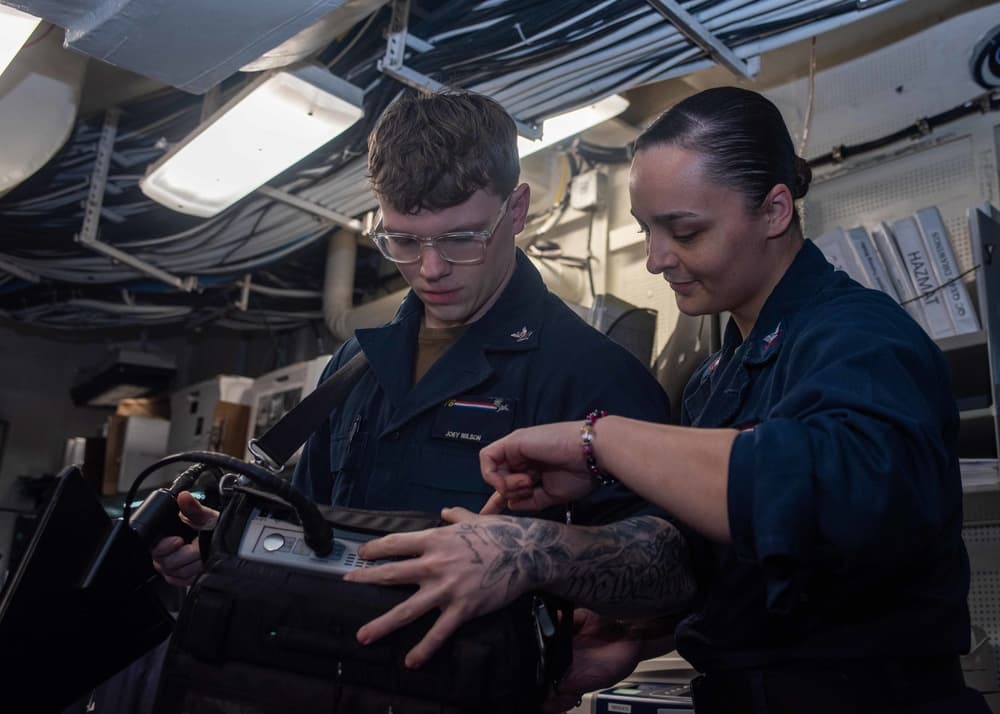
Cryptologic Technician Collection sailor
Cryptologic Technician Collection rating badgeCTR

Cryptologic Technician Collection(CTR Navy Rating)

Cryptologic Technician Collection specialists operate electronic collection and signals intelligence systems. They identify, collect, and report on electronic emissions.

Overall

6.9/10
Burnout4.2
Lifestyle7.5
Civilian ROI9.7
Happiness7.0
Manning %5.2
$$$ Pay5.5

Quick Stats

Enlistment BonusNo active bonus
Civilian Sector Transferability$85k–$145k
Advancement OutlookAverage
Manning %94%
Initial Contract4 yr active
Medical Requirements
  • ✓No speech impediment

Security Clearance

Top Secret / Sensitive Compartmented Information~$15K–$50K civilian sector value

Requires a Single Scope Background Investigation (SSBI), including interviews with references, financial review, and a possible polygraph. The process typically takes 6–12 months and is initiated during your training pipeline.

ASVAB Requirements

Line-score options — meet any one

  • PC+MK≥110
  • AR+PC+MK≥164

Who This Is Best For

Best for detail-oriented individuals who enjoy pattern recognition and want a career where their work directly informs military and national security decisions. TS/SCI clearance and direct intelligence community experience make this one of the strongest post-Navy career paths available. Ideal for focused, analytical personalities.

+Pros

  • ✓Strong civilian career transition

–Cons

  • ✗Long A-school pipeline

Real Opinions

+Positive

✓

“Fulfilling work, intelligent atmosphere, and an interesting job field that can help you learn a lot. You also gain management experience when being put into a position delegating work to other sailors.”

Glassdoor|
✓

“You receive a Top Secret/SCI clearance, which really helps with getting a good job once you are out of the Navy.”

Glassdoor|

–Negative & Mixed

✗

“Be prepared for shore duty boredom and watch rotations. The clearance process is also stressful and takes forever.”

r/newtothenavy|
✗

“Inconsistency in the job depending on the command you are stationed at. When attached to a ship, there are minimal opportunities for practice other than when your ship is actually out to sea.”

Glassdoor|

Page 1 of 5

Share your opinion about CTR

0 chars
Select one:

Recruiter vs Reality

What the recruiter says vs. what it's actually like.

🫡 Recruiter says

“You will work with cutting-edge cyber technology and get a top secret clearance!”

💀 Reality

Source: MyNavyRates research

The clearance is real and valuable, but daily work can involve a lot of routine network maintenance and help-desk tickets. Cutting-edge tech varies widely by command.

🫡 Recruiter says

“CTR is the best signals intelligence job in the military.”

💀 Reality

Source: veteran feedback

CTR work involves long hours monitoring communications signals, much of it repetitive. The exciting analysis moments are real but infrequent. Most of the work is data processing and report writing.

Page 1 of 10

😱

Horror Stories

Real stories people have shared about this rate. Swipe to browse.

💀

“Navy CTs assigned to drone operations watched targets on high-resolution feeds for days, witnessing strikes in intimate detail from stateside suburbs. They cannot discuss any of it with families due to classification. Many fear that seeking mental health help will cost them their clearance.”

Source: rand.org|

Story 1 of 6

Share a horror story about CTR

0 chars

Related Reading

Guides on picking a rate, ASVAB, bonuses, promotion, and life after the Navy.

Getting Started

How do you choose the right Navy rate for you?

Choosing a Navy rate means weighing your ASVAB scores, lifestyle preferences, civilian career goals, and willingness to deploy or go to sea. Start by identifying which ratings you qualify for, then narrow the list by what matters most to you.

Getting Started

What is the ASVAB and what scores do you need?

The ASVAB is a multi-aptitude test that determines which Navy ratings you qualify for. Your sub-test scores combine into line scores, and each rating has minimum line-score requirements. Higher scores open more options.

Career & Pay

Which Navy rates have the biggest enlistment bonuses in 2026?

Active Component (Active Duty) only. Per the CNRC GENADMIN dated 24 July 2026, the biggest source-rate bonus is $40,000 — Nuclear Field on FY26 ship dates ($75,000 EB cap). Special Warfare Boat Operator (SB) follows at $35,000, then EOD and SEAL (SO) at $30,000, and Aviation Rescue Swimmer (AIRR) and Cryptologic Technician Maintenance (CTM) at $25,000. Special Operations Future Sailors who clear the elevated PST standards add a flat $20,000 EBPST. Most rates cap at $50,000 total EB. The Loan Repayment Program adds up to $65,000 on top, separately. Reserve component (SELRES) bonuses are governed by a different message and are not covered here.
Real Opinions

+Positive

✓

“Fulfilling work, intelligent atmosphere, and an interesting job field that can help you learn a lot. You also gain management experience when being put into a position delegating work to other sailors.”

Glassdoor|
✓

“You receive a Top Secret/SCI clearance, which really helps with getting a good job once you are out of the Navy.”

Glassdoor|

–Negative & Mixed

✗

“Be prepared for shore duty boredom and watch rotations. The clearance process is also stressful and takes forever.”

r/newtothenavy|
✗

“Inconsistency in the job depending on the command you are stationed at. When attached to a ship, there are minimal opportunities for practice other than when your ship is actually out to sea.”

Glassdoor|

Page 1 of 5

Share your opinion about CTR

0 chars
Select one:

Recruiter vs Reality

What the recruiter says vs. what it's actually like.

🫡 Recruiter says

“You will work with cutting-edge cyber technology and get a top secret clearance!”

💀 Reality

Source: MyNavyRates research

The clearance is real and valuable, but daily work can involve a lot of routine network maintenance and help-desk tickets. Cutting-edge tech varies widely by command.

🫡 Recruiter says

“CTR is the best signals intelligence job in the military.”

💀 Reality

Source: veteran feedback

CTR work involves long hours monitoring communications signals, much of it repetitive. The exciting analysis moments are real but infrequent. Most of the work is data processing and report writing.

Page 1 of 10

😱

Horror Stories

Real stories people have shared about this rate. Swipe to browse.

💀

“Navy CTs assigned to drone operations watched targets on high-resolution feeds for days, witnessing strikes in intimate detail from stateside suburbs. They cannot discuss any of it with families due to classification. Many fear that seeking mental health help will cost them their clearance.”

Source: rand.org|

Story 1 of 6

Share a horror story about CTR

0 chars
AR+PC≥110
Calculate your score →

Remarks

Accession program only. Accession Sailors may not have used marijuana (less experimental). Use of stimulant or depressant drugs, narcotics, hallucinogenic, LSD or psychedelic drugs are ineligible. Any history of drug or alcohol dependency is ineligible. Any peyote use is ineligible for Personnel Reliability Program (PRP) ratings. CTT, CTM, CTR and CTI Special Requirements: Members may be assigned to duty in submarines or duty involving aerial flight. All CTI, CTM, CTR and CTT applicants will read and sign the NAVPERS 1070/613 Volunteer for Duty in Submarines (MILPERSMAN 1306-402). Applicants electing not to sign the NAVPERS 1070/613 volunteering for this duty are ineligible for enlistment as CTI, CTM, CTR and CTT. The PSSQ is required and must be placed in the service record and the residual file. The applicant MUST be a U.S. citizen (no waivers) and all immediate family members must be either a U.S. citizen or a citizen of a country on the low threat matrix listed in ref (h). Single Scope Background Investigation (SSBI) originated at RTC. New accession applicants must participate in an in-depth personnel security screening interview conducted by an FCC/C10F special security representative at RTC. For lateral conversion requests, personnel security screening interview will be conducted by an FCC/C10F special security representative. Moral turpitude offenses are generally disqualifying. Former members of the Peace Corps are not eligible.

Source: CNRC / ECM Rating List, 19 Jan 2026. Verify current guidance with your recruiter before signing.

Training Pipeline — Total ~30 weeks (7 months)

8w
22w
Boot Camp— 8 weeks
RTC Great Lakes, IL
Basic military training for all recruits
A-School— 22 weeks
Pensacola, FL
15.9% washoutDifficulty: 3.3/10
Technical training for rating qualification
Fleet Assignment— 0 weeks
First duty station
Report to operational command

Calculate Your End Training Date and Holidays and Events You Will Miss During Training

Ship dates are approximate and based on the weekly RTC Great Lakes schedule. Confirm your exact date with your recruiter. Source: bootcamp.navy.mil

Career Progression Milestones

Estimated timeline based on current advancement rates. Actual timing varies by individual performance and Navy needs.

7 mo
1 mo
1yr 5mo
Training Complete— 7 mo
Pipeline finished (~7 mo) — Pensacola, FL
First Duty Station— 8 mo
Likely shore duty assignment
NEC Specialization Options— 2yr 1mo
28 specializations available
C06BC07AC12AC13A+ more

Advancement Outlook

E-2 to E-4 Advancement Outlook

Time to E-4: 30 months total

  • E-1 → E-2: 9 months at E-1. Automatic
  • E-2 → E-3: 9 months at E-2. Automatic
  • E-3 → E-4: 12 months at E-3. Automatic

E-4 is automatic — competitive advancement starts at E-5

How to advance faster to E-4

Your recruiter can process you in at E-2 or E-3 on day one if you qualify. Every rung skipped shortens the path to E-4 by months. Official transcripts / certificates required at enlistment.

  • E-2 →Easy
    2 years of JROTC completed. Easiest common path if your high school offers JROTC.
  • E-2 →Moderate
    24+ semester hours/ 36+ quarter hours of college credit (below the associate's threshold). Roughly one full year of college.
  • E-2 →Moderate
    Civil Air Patrol Billy Mitchell Award. Achievable with consistent cadet participation, but requires testing and leadership time.
  • E-2 →Moderate
    Sea Cadet Corps — reaching the Sea Cadet E-2 rate (join by age 17).
  • E-2 to E-3 →Moderate
    Boot camp leadership roles — roles don't auto-pin rank. Advancement comes from earning Honor Recruit or Hall of Fame at graduation (one award only, not stacked).
    • Honor Recruit up to E-2 — effectively the #1 ranked recruit in your division (~60-80 recruits), one Sailor per division per cycle. Selection is based on cumulative performance across all three academic exams, Physical Readiness Test (PRT) scores, uniform and personnel inspections, military bearing, and peer/Recruit Division Commander (RDC) evaluations. Roles that typically compete at this level:
      • Assistant LPO (ALPO) — deputy to the LPO.
      • Master-at-Arms (MAA) — barracks cleanliness, standards, and discipline.
      • Yeoman (YN) — division admin, paperwork, and tracking.
      • Educational Petty Officer (EPO) — study groups, test prep, and academic remediation.
      • Religious Petty Officer (RPO) — coordinates chapel and religious services.
      • Athletic Petty Officer (APO) — leads PT and fitness assessments.
      • Mail Petty Officer — handles mail distribution and tracking.
      • Section Leaders — squad-level leaders below the division-wide roles.
    • Hall of Fame up to E-3 — the most elite recognition at Recruit Training Command (RTC), awarded Navy-wide rather than per division. Requires exceptional performance in every training metric: top-tier scores on all three academic exams (typically 90%+), "Outstanding" on the final Physical Readiness Test (PRT), near-perfect uniform and personnel inspections, held a division leadership role with strong performance, and zero remediation, infractions, or negative marks across the full training cycle. Senior leadership roles positioned to compete:
  • E-3 →Moderate
    3 years of JROTC completed (any service branch). Straightforward if your high school has the program — three school years of enrollment.
  • E-3 →Hard
    Eagle Scout (BSA) or Gold Award (GSUSA) — the highest youth scouting awards. Typically takes years of participation and a capstone service project.
  • E-3 →Hard
    Associate's degree (or 48+ semester hours / 72+ quarter hours of college credit, 100-level or higher from an accredited institution). Two years of full-time college.
  • E-3 →Hard
    Civil Air Patrol Earhart Award. Uncommon — only a small fraction of CAP cadets reach this level.
  • E-3 →Hard
    Sea Cadet Corps — reaching the Sea Cadet E-3 rate (join by age 16).

Ceiling is E-3 at accession — stacking qualifications doesn't push you to E-4 out of the gate.

Ways to accelerate E-4 after you're in

  • Very HardMeritorious Advancement Program (MAP) — Command-nominated promotion that skips the exam entirely. Each command gets a small seasonal quota of MAP slots and hands them to the top performers based on evaluation ranking. Fastest path on paper, but you're competing directly with every other sailor at your command.

Rules can change — verify current criteria with your recruiter and in the latest Navy Recruiting Manual (COMNAVCRUITCOM) before signing any paperwork that assumes a specific entry paygrade.

E-5 and E-6 Advancement Outlook

Average★☆★☆

1 of 4 factors working in your favor · 1 working against you

  • ▼

    Manning

    E5 83%E6 105%
    E5 is balanced while E6 is overmanned. Your advancement outlook depends on which paygrade you're promoting into next.

    Source: N12 Community Health Indicator brief (FY26)

  • ●

    Enlistment bonus

    No

    No active enlistment bonus for this rate. Most ratings do not offer one in any given fiscal year, so this is a neutral signal on its own.
  • ▲

    Overall Selective Reenlistment Bonus (SRB) Outlook

    Strong opportunity SRB added/increased · SRB reduced/eliminated
    Navy is paying a substantial bonus to retain sailors. Strong signal that billets are staying empty at senior paygrades.

Bonuses — Click here to see your military pay

All Active CNRC Enlistment Incentives

Active Duty

Source: CNRC GENADMIN 24 JUL 26 — effective Jul 27, 2026, contracts authorized through Dec 31, 2026 (NDAA 2026)

Active Component only. Reservist (SELRES) shipping bonuses are set by a separate CNRF incentive message — ask your recruiter.

Bonuses can stack up to the rating's EB cap; LRP is independent. Footnote numbers match the source GENADMIN.

Loan Repayment Program (LRP)

Stacks on top of EB cap. AFQT ≥ 50, ~25% tax withheld, DD 2475 required per payment.

CTR-SG

October–September Any

Up to $65,000[1]

LRP Notes

  • 1Future Sailor must access into Active Component and have LRP listed as a guarantee on their current Annex to DD Form 4 (NAVCRUIT 1133/52). The NRC LRP Manager approves prior to a new Annex being generated. LRP can stack with all other EB types up to its own $65,000 maximum. Applicants need AFQT 50+, must submit a DD 2475 for each payment, and roughly 25% of each payment is withheld for taxes (a W-2 is issued).

Cross-cutting Policy Notes

  • 1Future Sailors with Tier 3 education credentials (e.g., HiSET / GED / alternative credential) are NOT authorized any EB.
  • 2Prior-service members re-enlisting onto Active Duty must enter at pay grade E-4 or below, must not have received a bonus on their first enlistment, and (Navy prior-service) must have been separated from active duty for at least 12 months before shipping.
  • 3EBHS (EB for High School) is currently NOT AUTHORIZED in this message — distinct from prior cycles when EBHS was offered.
  • 4During lapsed appropriations, classifiers may still include EB on a contract if the DD 1966 carries the funding-availability disclaimer; payment is then subject to a future appropriation.
  • 5Bonuses are paid in installments. Only the unearned portion of EBSR is eligible for recoupment; EBSHP/EBPST cannot be recouped due to post-RTC reclassification or separation.

Always verify with a recruiter before signing — eligibility depends on AFQT, education tier, security-clearance adjudication, ship date, and program availability. Funding subject to congressional reauthorization of 37 USC § 331.

How to qualify & get paid

  1. Sign a contract for this rate at MEPS with the bonus(es) listed on your NAVCRUIT 1133/52 Enlistment Guarantee — eligibility is locked at signing.
  2. Ship to Recruit Training Command (RTC) Great Lakes inside the authorized window — EBSHP and EBPST are earned and paid at RTC graduation and cannot be recouped after.
  3. Complete A-school (and any required follow-on C-school or qualifying course) for your rating — EBSR is earned and paid at school graduation, except for the Special-Operations pipelines, which pay later (AIRR after FRS + first duty station; SO after SQT; SB after SWCC Charlie phase; EOD/ND after their respective A-schools).
  4. LRP is paid annually upon submission of a DD 2475; ~25% is withheld for federal taxes, and a W-2 is issued. LRP must be on your contract at accession — it cannot be added later via reclassification.

Important details & disqualifiers

  • •All bonuses on this page are Active Component (Active Duty) only. Reservists (SELRES) follow a separate CNRF incentive message — ask your recruiter.
  • •Future Sailors with Tier 3 education credentials (HiSET / GED / alternative) are NOT authorized any EB.
  • •AFQT score must be ≥ 31 for EBSHP and ≥ 50 for LRP.
  • •EBSR is the only EB type that can be partially recouped if you separate before completing the obligated service. EBSHP / EBPST cannot be recouped after RTC.
  • •Bonus payments are subject to federal income tax withholding.
  • •EB-for-High-School (EBHS) is currently NOT authorized in the July 2026 GENADMIN — distinct from earlier cycles when it was offered.
  • •Funding: NDAA 2026 authorizes contracts through 31 December 2026; appropriations cover obligations through 30 September 2026; max-EB authority extends through 10 January 2027 — all subject to congressional reauthorization of 37 USC § 331.
  • •This rate requires a security clearance — failure to obtain clearance may affect bonus eligibility (and several special-operations footnotes explicitly require an earned NEC + clearance before payment).

Historical Bonus Trend by Contract Length

Past NAVADMIN cycles, broken out by contract years. The current CNRC GENADMIN's source-rate bonus (EBSR) is a single amount per rate and appears above; the four-line chart below shows the older multi-contract structure for trend context only.

You May Qualify for a Navy Enlisted Classification (NEC)

Specialties within this rate you can select, some with additional compensation. Each NEC has its own training, bonus potential, and career path.

0000Any NEC or no NEC (all qualifying Sailors in this rating)

Selective Reenlistment Bonus (SRB)

🟡

First Reenlistment (17 mo to 6 yrs Active Duty)

$30,000

Max

Reduced · effective 2025-12-18

🔴

Second Reenlistment (6 to 10 yrs Active Duty)

$75,000

Max

Being Eliminated · effective 2025-12-18

—

Third Reenlistment (10 to 14 yrs Active Duty)

Not eligible

C16AJourneyman Analysis and Reporting Specialist

Conducts digital, traffic, and metadata analysis; Drafts/disseminates products and intelligence reports in support of fleet and national objectives.

Potential Civilian Post-Navy Outcomes

SIGINT Analyst

Transferability: 8/10

$85k–$145k

Post-Navy Salary Trajectory

Estimated civilian salary growth after separating from the Navy, based on industry data for this rating's skill set.

Year 1

$82K

Year 5

$110K

Year 10

$140K

10-year growth: +71%

Free Certifications & Credentials

Certifications and licenses the Navy will pay for free through Navy COOL and on-the-job training.

CompTIA Security+

CompTIA

COOL Funded~$15K civilian sector value

Certified Information Systems Security Professional (CISSP)

ISC2

COOL Funded~$30K civilian sector value

Retention & Burnout

First-Term Retention

57%

choose to reenlist

Burnout Index

4.2/10

Moderate

Watch Intensity

5

Hours/Day

9

Deploy Tempo

4

Manning Strain

1

Low Morale Risk

3

Attrition Signal

4

What this means: The Burnout Index combines watch intensity (25%), daily hours (20%), deployment tempo (15%), manning strain (15%), morale (15%), and attrition (10%) into a single risk score.

Lifestyle8/10

Ship vs. Shore Split

30% / 70%

Sea Duty Tempo

Low — 4/10

Physical Demand

low — indoor

Sea Duty Tempo measures how much of a career is spent in deployable billets — ships, submarines, deploying squadrons, and expeditionary units — and how often those units leave homeport. It is separate from physical demand: an administrative job aboard a deployed unit still deploys, and a hands-on maintenance job at a shore command does not.

Watch Standing

4-section watch rotation (8 on / 16 off)

In a 4-section rotation, the crew is divided into four teams. Each team stands a 6-hour watch shift, then has 18 hours off before their next watch. In port, you stand 24-hour duty roughly every 4 days — meaning you stay aboard the ship overnight on your duty day.

Watch stations often in climate-controlled spaces. SCIF access may be required for some watches.

OPNAVINST 3120.32DUSNI ProceedingsNavy Watch Standing Manual

Life on Watch — Sea Stories

“I was on collection watch in a SCIF aboard a destroyer when I intercepted a transmission that matched a priority intelligence requirement. Everything I'd trained for clicked — I identified the emitter, geo-located the source, and had the report drafted in under ten minutes. The intel went up the chain to the strike group commander within the hour. I can't say what happened next, but I can say that my work on that watch directly influenced a real-world operational decision. As a CTR, you spend hundreds of hours listening to nothing, and then one watch changes everything.”

Veteran account (composite)

Story 1 of 6

Common Duty Stations

Naval Station NorfolkSea
Family Friendly

6.9/10

Schools + spouse jobs

Base Housing Wait

10 months

Avg waitlist for on-base

Cost of Living

95

100 = national avg

Naval Base San DiegoSea
Family Friendly

7.9/10

Schools + spouse jobs

Base Housing Wait

14 months

Avg waitlist for on-base

Cost of Living

135

100 = national avg

Joint Base Pearl Harbor-HickamSea

Media & Videos

Cryptologic Technician Collection (CTR)
youtube

Cryptologic Technician Collection (CTR)

Direct Links (if videos are blocked)

  • Cryptologic Technician Collection (CTR)
🎓

Step-by-Step Strategy Guide to Getting an Associate's Degree After Boot Camp — For Free

Most sailors don't know they already have 9 or more general education college credits just from graduating boot camp.

Based on your rate, you may have more.

You can earn an associate's degree for free in 12-30 months without spending a dime.

Strategy Guide & Boot Camp College Credit Calculator →
Not the rate for you? See other ratings side by side →

Talk to a Sailor

Community Poll

If you could go back, would you pick CTR again?

Career & Pay

How does promotion work in the Navy?

Navy advancement depends on exam scores, evaluations, time in rate, and available quotas. Some ratings promote over 50% of eligible sailors while others promote less than 5%. Your rate choice directly affects how fast you can advance.

Career & Pay

Which Navy jobs set you up best for a civilian career?

Information warfare ratings (IT, CTN, IS) and medical ratings (HM) offer the strongest civilian career pipelines. Security clearances, technical certifications, and hands-on experience make these sailors highly competitive in the private sector.

Browse all articles →

Life on Watch — Sea Stories

“I was on collection watch in a SCIF aboard a destroyer when I intercepted a transmission that matched a priority intelligence requirement. Everything I'd trained for clicked — I identified the emitter, geo-located the source, and had the report drafted in under ten minutes. The intel went up the chain to the strike group commander within the hour. I can't say what happened next, but I can say that my work on that watch directly influenced a real-world operational decision. As a CTR, you spend hundreds of hours listening to nothing, and then one watch changes everything.”

Veteran account (composite)

Story 1 of 6

  • Leading Petty Officer (LPO) — runs day-to-day ops inside the division.
  • Assistant RCPO (ARCPO) — backs up the RCPO and steps in when needed.
  • Recruit Chief Petty Officer (RCPO) — senior recruit in the division, overall accountability to the RDCs. Highest visibility for meritorious advancement.
+4
−2
$75,000 max
  • ●

    Billet-Based Advancement eligibility

    Legacy exam cycles

    This rating has not been integrated into Billet-Based Advancement yet. Advancement still runs through the traditional exam and Final Multiple Score (FMS) system — your exam score is one of the main factors in how you promote.
  • Sources: Manning NAVADMIN · SRB NAVADMIN · Billet-Based Advancement Handbook (NAVADMIN 255/24, updated via NAVADMIN 112/25). How to interpret these factors →

    Requirements

    • Top Secret/Sensitive Compartmented Information security clearance required.

    Selective Reenlistment Bonus (SRB)

    🟢

    First Reenlistment (17 mo to 6 yrs Active Duty)

    $45,000

    Max

    Newly Added

    🟢

    Second Reenlistment (6 to 10 yrs Active Duty)

    $75,000

    Max

    Newly Added

    🟢

    Third Reenlistment (10 to 14 yrs Active Duty)

    $45,000

    Max

    Active (unchanged)

    C18AIntermediate Signals Analyst

    Performs intermediate acquisition, analysis and reporting of state-of-the-art communications signals.

    Selective Reenlistment Bonus (SRB)

    🟢

    First Reenlistment (17 mo to 6 yrs Active Duty)

    $60,000

    Max

    Newly Added

    🟢

    Second Reenlistment (6 to 10 yrs Active Duty)

    $75,000

    Max

    Newly Added

    🟢

    Third Reenlistment (10 to 14 yrs Active Duty)

    $45,000

    Max

    Active (unchanged)

    C19AAdvanced Signals Analyst

    Performs advanced acquisition, analysis and reporting of state-of-the-art communications signals.

    Requirements

    • Must have completed a tour in non-Morse operations, and completed one shore tour in Signal Search and Development. The Signal Search and Development tour must be completed immediately prior to attending A-232-0452 course.

    Selective Reenlistment Bonus (SRB)

    —

    First Reenlistment (17 mo to 6 yrs Active Duty)

    Not eligible

    —

    Second Reenlistment (6 to 10 yrs Active Duty)

    Not eligible

    🟢

    Third Reenlistment (10 to 14 yrs Active Duty)

    $75,000

    Max

    Active (unchanged)

    771BNaval Special Warfare (NSW) Tactical Information Operations (TIO) Operator

    Provides focused cryptologic and Tactical Information Operations support to NSW. Performs signals intelligence, direction finding, and precision geolocation operations in support of Special Operations Forces (SOF) mission sets on ground, air and maritime environments.

    Requirements

    • TS/SCI security clearance and counter-intelligence polygraph required.
    • Members in paygrades E4-E9 will retain this NEC for only one tour outside of NSW; if member does not return to NSW duties within one tour outside of NSW, training must be repeated.

    Selective Reenlistment Bonus (SRB)

    —

    First Reenlistment (17 mo to 6 yrs Active Duty)

    Not eligible

    🟢

    Second Reenlistment (6 to 10 yrs Active Duty)

    $60,000

    Max

    Active (unchanged)

    🟢

    Third Reenlistment (10 to 14 yrs Active Duty)

    $75,000

    Max

    Active (unchanged)

    C23AMorse Code Intercept Operator

    Performs complex search and collection duties. Operates cryptologic collection systems comprised of radio receivers, recorders, computer terminals, and peripheral equipment.

    Selective Reenlistment Bonus (SRB)

    🟢

    First Reenlistment (17 mo to 6 yrs Active Duty)

    $60,000

    Max

    Active (unchanged)

    —

    Second Reenlistment (6 to 10 yrs Active Duty)

    Not eligible

    —

    Third Reenlistment (10 to 14 yrs Active Duty)

    Not eligible

    703CNaval Special Warfare (NSW) Tactical Information Operations (TIO) Analyst

    Provides focused cryptologic and tactical information operations support to NSW utilizing special operations forces (SOF) unique tactics, techniques, and procedures to perform full spectrum signals intelligence (SIGINT) operations.

    Requirements

    • Top Secret/Sensitive Compartmented Information security clearance with counterintelligence polygraph required.
    • Members in paygrade E4-E9 will retain this NEC code for only one tour outside of NSW duties; if member does not return to NSW duties within one tour outside NSW, training must be repeated.

    Selective Reenlistment Bonus (SRB)

    —

    First Reenlistment (17 mo to 6 yrs Active Duty)

    Not eligible

    —

    Second Reenlistment (6 to 10 yrs Active Duty)

    Not eligible

    🟢

    Third Reenlistment (10 to 14 yrs Active Duty)

    $60,000

    Max

    Active (unchanged)

    C06BP-8 Airborne Cryptologic Analyst and Maintainer

    Performs in-flight functions as a P-8 Airborne Cryptologic Analyst and Maintainer. Knowledgeable of the airborne Cryptologic data collection systems and emergency and flight procedures.

    Requirements

    • Members will be in Duty Involving Flying/Crewmember status and will attend NACCS and SERE as required IAW OPNAVINST 1000.24 (Series). This NEC is earned following locally completed squadron ground events and P-8 Mission Specialist JQR.
    • Submission of NAVPERS 1221/6 with Commanding Officer's recommendation to BUPERS-312 for awarding of this NEC code. 31
    C07ANational OPELINT Analyst

    Performs analysis and reporting of all-source information for tactical and strategic commanders in support of battle force and national intelligence objectives. Knowledgeable of capabilities, limitations, tasking and validation processes of various national and conventional intelligence collection and processing systems.

    Requirements

    • In addition to formal training, this NEC code may also be earned via OJT on a case-by-case basis. OJT process is not developed to replace attendance of the National OPELINT course, but to provide options when a Sailor's attendance to the course is prohibited due to factors beyond their control. NEC via OJT requirements as follows: a. National Cryptologic School SIGE 2120 (Apprentice) and SIGE 3120 (Journeyman) OPELINT courses. b. SUPPLOT/EXPLOT PQS NAVEDTRA 51000, Watch Sections 100-110 and 301 Battle Force ELINT Analyst. c. Submission of NAVPERS 1221 /6 with Commanding Officer's recommendation to BUPERS-312.
    • Top Secret/Sensitive Compartmented Information Security Clearance required.
    C12AAssistant Cryptologic Resource Coordinator (ACRC)

    Conducts afloat strike group cryptologic operations utilizing organic, national and joint cryptologic resources in support of the Optimized Fleet Response Plan (OFRP) and Fleet Readiness.

    Requirements

    • Top Secret/Sensitive Compartmented Information security clearance required.
    • Previous ACRC experience required for personnel assigned to shore fleet Information Operations Center NEC code C12A billets in Georgia, Hawaii, Texas, and Maryland.
    • Prior afloat sea tour required to serve as a Numbered Fleet Staff ACRC.
    C13AAfloat Cryptologic Manager

    Supervises SSEE Suite personnel and equipment.

    C14ACryptologic Subsurface Augmentee Operator

    Operates subsurface systems, applying complex collection and analysis techniques, and prescribed reporting procedures.

    Requirements

    • NEC code earned through completion of local PQS/JQR programs and per COMNAVIFORINST 1221.1.
    C18BJourneyman Signals Analyst

    Performs journeyman level acquisition, analysis and reporting of communications signals to include modulation, multiplexing and coding theory.

    Requirements

    • Member must complete local Signals Analyst JQS, mandated NSA in-house courses of instruction and attainment of MCCEP Phase 1.
    • Member must submit NAVPERS 1221/6 with Commanding Officer's recommendation to BUPERS-312 for awarding of this NEC Code.
    C19BMaster Signals Development Analyst

    Graduate of the Military Signals Analysis Program (MSAP). Applies advanced tradecraft skills and critical thinking while performing advanced signals analysis and specialized signals development. Certifies as National Security Agency/Central Security Service (NSA/CSS) Adjunct Faculty, providing formal classroom instruction and on-the-job training.

    Requirements

    • Member must have Top Secret security clearance with Sensitive Compartmented Information access.
    • Member must have a current Counter-Intelligence Polygraph and completed pre-screening for any foreign national association.
    • Member must complete one tour in Signals Development or Signal Analysis.
    • Member must be NSA Adjunct Faculty certified.
    • Member must obliserve for six years.
    C20AShip's Signal Exploitation Equipment Increment Echo (SSEE INC E) Operator

    Performs mobile cryptologic collection duties. Operates the SSEE Increment E (AN/SSQ-137) cryptologic system installed on U.S. Navy Combatants in order to provide cryptologic combat support to warfare commanders.

    Requirements

    • Top Secret (TS)/Sensitive Compartmented Information (SCI) security clearance required.
    C21AShip's Signal Exploitation Equipment Increment Foxtrot (SSEE INC F) Operator

    Performs mobile cryptologic collection duties. Operates the SSEE Inc F (AN/SSQ-130) cryptologic systems installed on U.S. Navy Combatants in order to provide cryptologic combat support to warfare commanders.

    Requirements

    • Top Secret (TS)/Sensitive Compartmented Information (SCI) security clearance required.
    C24ACryptologic Subsurface Augmentee Supervisor

    Supervises subsurface cryptologic augmentee teams and applies analysis to both organic and non-organic sources to provide indications and warning to supported commanders. Manages all cryptologic systems and resources.

    Requirements

    • This NEC code is earned through local PQS/JQR programs completion and per COMNAVIFORINST 1221.1.
    702CWarfare Tactics Instructor (WTI) Level IV

    Responsible for informing, evaluating, and assessing integrated Information Warfare (IW) doctrine, planning, tactics, and operations. Demonstrate advanced instructional techniques; develop, implement, and evaluate curricula, and instruct for the Naval Information Warfighting Development Center (NIWDC) WTI training development cycle.

    708AExpeditionary Information Warfare (Tactical)

    Provides focused tactical cryptologic collection, real-time analytic support, computer network operations, and cyber-enabling support to naval forces. Deploys in support of Fleet and National priority intelligence requirements, executing distributed collection operations in small (2-3 personnel) detachments.

    Requirements

    • Sailors must meet the minimum standard for assignment at NAVEXINTCOM as defined in MILPERSMAN 1300-802.
    • Successful completion of twelve-week basic operator course comprised of advanced technical and system training.
    • Individual must complete six months OJT, complete command managed JQR, complete at least one successful six-month operational deployment, and obtain Commanding Officer recommendation to earn NEC code.
    • Individual must possess a current and valid TS/SCI security clearance with counter-intelligence scope polygraph.
    725ACombat Systems Senior Enlisted

    Performs duties as the senior enlisted principal advisor to the Combat Systems and Operations Officer as well as the Tactical Action Officer (TAO) during tactical situations. Provides tactical, technical, administrative and training expertise in all warfare areas.

    732AEast Asia Area Specialist

    Possesses specific knowledge, skills and experience of information warfare capabilities to support naval and joint operations in the Pacific/East Asia area of operations.

    Requirements

    • TS/SCI security clearance required.
    • Must have a minimum of 4 years in a billet with documented focus on the East Asia mission to be awarded this NEC code.
    749BMain Propulsion Steam Generating Plant Inspector

    Inspects material condition, monitors general readiness, and diagnoses improper operating procedures and equipment casualties/failures. Recommends operations and maintenance corrective measures.

    Requirements

    • Member must be mission-qualified flight crew member (E4 or above; mission qualification granted by the parent command) and have at least 18 months remaining on current PCS tour upon completion of CRMIT.
    • Must submit NAVPERS 1221/6 with Commanding Officer's recommendation to BUPERS-312 for awarding of this NEC code.
    777AWeapons and Tactics Instructor

    Performs in an instructor billet at Weapons Schools, Type Wings, and Aviation Squadrons within the classroom, lab/simulator, or during training flights. Performs in flight duties as an Aircrewman, Instructor, and Evaluator. Rotary wing and Airborne Command Control and Logistics aircrew perform in-flight duties as an Aircrewman, Instructor, and Evaluator.

    Requirements

    • All aircrew attending prerequisite courses must be in an UP status for flying, must be NATOPS current and qualified in model.
    • "Rotary Wing" CIN: S-050-0836 required for AWR and AWS only. Candidates must be ACTC Level III, meet NAWDC minimum flight time requirements, and pass instructor screening. Through training process, instructor will qualify as range Safety Officer for training events, as well as Small Arms Marksmanship Instructors (SAMI) and Aerial Gunnery Instructors (AGI).
    • "VP" candidates for the MPRA WTI course must be ACTC Level IV; graduates will be identified as WTI/ACTC Level 500 instructors.
    • "VQ/VPU" candidates for the Reconnaissance Tactics Instructor Course (RTIC) must be ACTC Level IV; graduates will be identified as WTI/ACTC Level 500 instructors.
    • "VQ(T)" candidates for the Mercury Tactics Instructor Course (MTIC) must be ACTC Level 400; graduates will be identified as WTI/ACTC Level 500 instructors. SAMI and HAGI are not required for VQ(T) ACTC 500 Aircrewmen.
    • "VRC/VRM" candidates for the Combat Logistics Instructor (CLI) Course in the C-2A or CMV-22 must complete the Combat Logistics Systems course, COD Advanced Readiness Program, Navy Instructor Training Course (NITC), and ACTC Level IV. Graduates will be identified as CLI/ACTC Level 500 instructors.
    785BSpecial Operations Forces (SOF) Offensive Cyberspace Operator

    Provides limited and focused Offensive Cyberspace Operations support to SOF. Conducts time sensitive intelligence operations and delivers cyberspace effects in direct support of SOF tactical objectives in the air, ground, and maritime environments.

    Requirements

    • TS/SCI security clearance.
    • NEC code is awarded upon completion of the Joint Special Operations Command (JSOC) Cyber Operators Couse.
    • The JSOC Cyber Operators Course is a mandatory course for all Navy SOF Offensive Cyberspace Operators providing direct support to JSOC.
    • Member will retain all previously earned NEC codes upon awarding of this NEC.
    785CSpecial Operations Forces Expeditionary Cyberspace Operator (SOF ECO)

    Performs local and close-access expeditionary cyberspace operations as assigned in support of SOF mission-sets. When augmented to Joint Task Forces (JTFs), operationally leverages cyber capabilities from the maritime, air, and ground domains.

    Requirements

    • TS/SCI security clearance.
    • Member must be assessed and selected for special duty assignment at a CNO Priority One Command.
    • Member must complete JSOC Cyber Operator Training Course (COTC), Expeditionary Cyber Operator Training Course (ECOTC) and JQR.
    • Member will retain component NEC codes, and all previously earned NEC codes upon awarding of this NEC. 272
    785DSpecial Operations Forces Tactical Cryptologic Warfare Operator (SOF TAC-CWO)

    Performs full-spectrum cryptologic warfare (Electronic Warfare, Signals Intelligence (SIGINT) and Cyber) as assigned in support of SOF mission sets. When augmented to Joint Task Forces (JTFs), operationally leverages cryptologic capabilities from the maritime, air, ground, space, cyberspace and commercial domains.

    Requirements

    • TS/SCI security clearance.
    • Member must be assessed and selected for special duty assignment at a CNO Priority One Command.
    • Member must complete JSOC Tactical Cryptologic Warfare Operator Training Course (CWOTC) and JQR.
    • Member will retain component NEC codes, and all previously earned NEC codes upon awarding of this NEC.
    785ESpecial Operations Forces (SOF) Sensitive Collection and Reconnaissance - Operator (SCAR-O)

    Performs advanced-to-mastery level full-spectrum technical collection, surveillance, and reconnaissance. SOF tactical and strategic mission sets via cryptologic warfare, cyber, special communications, unmanned systems, robotics and technical surveillance capabilities.

    Requirements

    • Member must possess a TS/SCI security clearance.
    • Member must be assessed and selected for special duty assignment to a CNO Priority One Command.
    • Member should possess one of the following NEC codes from the following job fields prior to entering SCAR-O training and qualification pipeline: 785B, 785C, 785D, 785G, 785H, 785I.
    • Member must complete SCAR-O assessment and selection (SCAR-O A&S), technical training and qualification pipeline, JQR and mandatory 12- month probationary period.
    • Member will retain component NEC codes, and all previously earned NEC codes upon awarding of this NEC code for future inventory management.
    785FSpecial Operations Forces (SOF) Sensitive Collection and Reconnaissance - Analyst (SCAR-A)

    Performs advanced-to-master-level full-spectrum analysis supporting SOF mission-sets that satisfy strategic objectives. Augments Joint Task Forces and leverages novel and advanced analytical capabilities supporting highly complex operations in sensitive, strategic environments in the air, ground, maritime, undersea, space, cyberspace, and commercial domains.

    Requirements

    • Member must possess a TS/SCI security clearance.
    • Member must be assessed and selected for special duty assignment to a CNO Priority One Command.
    • Member must complete JSOC Sensitive Collection and Reconnaissance Analyst Training Course (SCARATC), technical training and qualification pipeline and Unit-specific JQR.
    • Member will retain component NEC code, and all previously earned NEC codes upon awarding of this NEC. 273
    785JSpecial Operations Forces Intelligence Targeting Officer (SOF ITO)

    Coordinates full-spectrum intelligence analysis for targeting in order to enable kinetic and non-kinetic effects in support of SOF mission-sets. Augments Joint Task Forces (JTFs) by synchronizing, integrating and directing employment of U.S.

    Requirements

    • Member must possess a TS/SCI security clearance.
    • Member must be assessed and selected for special duty assignment to a CNO Priority One Command.
    • Member must complete JSOC Intelligence Targeting Officer Training Course (ITOTC) and JQR.
    • Member will retain component NEC and all previously earned NEC codes upon awarding of this NEC code.
    Family Friendly

    6.6/10

    Schools + spouse jobs

    Base Housing Wait

    18 months

    Avg waitlist for on-base

    Cost of Living

    155

    100 = national avg

    View all stations →

    Real questions from people considering Cryptologic Technician Collection, answered by current and former sailors.

    No questions yet for Cryptologic Technician Collection.

    Be the first to ask!

    0/500

    🖥️ Related Navy Ratings in Infowar

    Other infowar ratings sailors often compare against CTR Cryptologic Technician Collection.

    CTICryptologic Technician InterpretiveCTMCryptologic Technician MaintenanceCTTCryptologic Technician TechnicalCWTCyber Warfare TechnicianISIntelligence SpecialistITInformation Systems TechnicianITEInformation Systems Technician Submarines – Electronic WarfareITNInformation Systems Technician Submarines – NetworkITRInformation Systems Technician Submarines – CommunicationsLNLegalmanMCMass Communications SpecialistMUMusicianNCNavy CounselorPSPersonnel SpecialistRPReligious Program SpecialistRWRobotics Warfare SpecialistYNYeomanYNSYeoman – Submarines
    Compare CTR side-by-side with these ratings→