myNavyRates.rg
Home/Compare All Rates/IS
Donate
Compare All RatesBest ListsQuizPayBonusesASVAB CalculatorAdvancement Name SearchDuty StationsFamily ImpactFree DegreeRecruitersBe an OfficerArticlesFAQs
myNavyRates.rg
Donate

Explore

  • All Rates
  • Side-by-Side
  • Best Lists
  • Articles
  • FAQs

Tools

  • Take the Quiz
  • Anti-Match Quiz
  • ASVAB Calculator
  • Pay
  • Pay Value
  • Bonuses
  • Advancement

Life in the Navy

  • Duty Stations
  • Family Impact
  • Free Degree
  • Be an Officer
  • Recruiters

About

  • About
  • Contact
  • Changelog
  • Donate
  • Privacy
  • Disclaimer
  • Sitemap

Not affiliated with the U.S. Navy or Department of Defense.·© 2026 myNavyRates.org. All rights reserved.

HomeCompare RatesQuizBonusesASVAB CalculatorMore
Home/Rates/IS
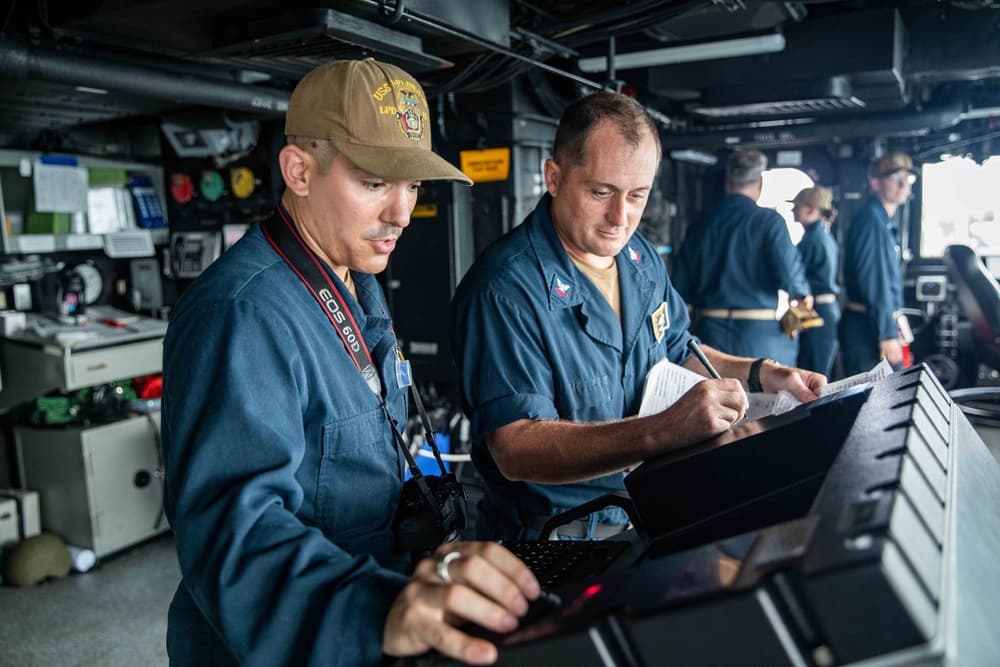
Intelligence Specialist sailor
Intelligence Specialist rating badgeIS

Intelligence Specialist(IS Navy Rating)

Intelligence Specialists collect, analyze, and report intelligence data from various sources. They prepare briefings, targeting packages, and threat assessments.

ATFAdvanced Technical Field

Overall

6.3/10
Burnout4.1
Lifestyle7.8
Civilian ROI8.9
Happiness7.0
Manning %2.8
$$$ Pay5.5

Quick Stats

Enlistment BonusNo active bonus
Civilian Sector Transferability$75k–$130k
Advancement OutlookAverage
Manning %101%
Initial Contract6 yr active
Medical Requirements
  • ✓Vision: Corrects to 20/20
  • ✓No speech impediment

Security Clearance

Top Secret / Sensitive Compartmented Information~$15K–$50K civilian sector value

Requires a Single Scope Background Investigation (SSBI), including interviews with references, financial review, and a possible polygraph. The process typically takes 6–12 months and is initiated during your training pipeline.

ASVAB Requirements

Line-score options — meet any one

  • GS+AR+MK+VE≥219

Who This Is Best For

Best for critical thinkers who enjoy research, data analysis, and connecting dots across multiple information sources. TS/SCI clearance and direct analytical experience are highly sought after by CIA, DIA, NSA, and defense intelligence contractors — making this one of the strongest government career pipelines. Ideal for intellectually curious individuals who want their work to have direct strategic impact.

+Pros

  • ✓Strong civilian career transition

–Cons

    Real Opinions

    +Positive

    ✓

    “Best decision I made was going IS. The clearance alone is worth it, and the skills transfer directly to six-figure civilian jobs.”

    r/navy|
    ✓

    “Most enjoyable is knowing that you have the best job security in the world.”

    Indeed|

    –Negative & Mixed

    ✗

    “Be prepared for shore duty boredom and watch rotations. The clearance process is also stressful and takes forever.”

    r/newtothenavy|
    ✗

    “The best performers end up getting burnt out because performance evaluations are not based on work output. The best evaluation scores are given to people who volunteer the most.”

    Indeed|

    Page 1 of 3

    Share your opinion about IS

    0 chars
    Select one:

    Recruiter vs Reality

    What the recruiter says vs. what it's actually like.

    🫡 Recruiter says

    “You will work with cutting-edge cyber technology and get a top secret clearance!”

    💀 Reality

    Source: MyNavyRates research

    The clearance is real and valuable, but daily work can involve a lot of routine network maintenance and help-desk tickets. Cutting-edge tech varies widely by command.

    🫡 Recruiter says

    “Intelligence Specialists work directly with the CIA and NSA.”

    💀 Reality

    Source: veteran feedback

    IS primarily supports fleet tactical intelligence: analyzing ship movements, producing briefings for commanding officers, and building targeting packages. Interagency work with CIA/NSA is rare and usually reserved for senior IS or specific shore billets.

    Page 1 of 9

    😱

    Horror Stories

    Real stories people have shared about this rate. Swipe to browse.

    💀

    “You can spend 3 years relaxing in an air-conditioned office pushing papers or working 120+ hours a week in a miserable environment overseas without seeing your family for over six months. It's pure luck.”

    Source: indeed.com|

    Story 1 of 4

    Share a horror story about IS

    0 chars

    Related Reading

    Guides on picking a rate, ASVAB, bonuses, promotion, and life after the Navy.

    Getting Started

    How do you choose the right Navy rate for you?

    Choosing a Navy rate means weighing your ASVAB scores, lifestyle preferences, civilian career goals, and willingness to deploy or go to sea. Start by identifying which ratings you qualify for, then narrow the list by what matters most to you.

    Getting Started

    What is the ASVAB and what scores do you need?

    The ASVAB is a multi-aptitude test that determines which Navy ratings you qualify for. Your sub-test scores combine into line scores, and each rating has minimum line-score requirements. Higher scores open more options.

    Career & Pay

    Which Navy rates have the biggest enlistment bonuses in 2026?

    Active Component (Active Duty) only. Per the CNRC GENADMIN dated 24 July 2026, the biggest source-rate bonus is $40,000 — Nuclear Field on FY26 ship dates ($75,000 EB cap). Special Warfare Boat Operator (SB) follows at $35,000, then EOD and SEAL (SO) at $30,000, and Aviation Rescue Swimmer (AIRR) and Cryptologic Technician Maintenance (CTM) at $25,000. Special Operations Future Sailors who clear the elevated PST standards add a flat $20,000 EBPST. Most rates cap at $50,000 total EB. The Loan Repayment Program adds up to $65,000 on top, separately. Reserve component (SELRES) bonuses are governed by a different message and are not covered here.

    Real Opinions

    +Positive

    ✓

    “Best decision I made was going IS. The clearance alone is worth it, and the skills transfer directly to six-figure civilian jobs.”

    r/navy|
    ✓

    “Most enjoyable is knowing that you have the best job security in the world.”

    Indeed|

    –Negative & Mixed

    ✗

    “Be prepared for shore duty boredom and watch rotations. The clearance process is also stressful and takes forever.”

    r/newtothenavy|
    ✗

    “The best performers end up getting burnt out because performance evaluations are not based on work output. The best evaluation scores are given to people who volunteer the most.”

    Indeed|

    Page 1 of 3

    Share your opinion about IS

    0 chars
    Select one:

    Recruiter vs Reality

    What the recruiter says vs. what it's actually like.

    🫡 Recruiter says

    “You will work with cutting-edge cyber technology and get a top secret clearance!”

    💀 Reality

    Source: MyNavyRates research

    The clearance is real and valuable, but daily work can involve a lot of routine network maintenance and help-desk tickets. Cutting-edge tech varies widely by command.

    🫡 Recruiter says

    “Intelligence Specialists work directly with the CIA and NSA.”

    💀 Reality

    Source: veteran feedback

    IS primarily supports fleet tactical intelligence: analyzing ship movements, producing briefings for commanding officers, and building targeting packages. Interagency work with CIA/NSA is rare and usually reserved for senior IS or specific shore billets.

    Page 1 of 9

    😱

    Horror Stories

    Real stories people have shared about this rate. Swipe to browse.

    💀

    “You can spend 3 years relaxing in an air-conditioned office pushing papers or working 120+ hours a week in a miserable environment overseas without seeing your family for over six months. It's pure luck.”

    Source: indeed.com|

    Story 1 of 4

    Share a horror story about IS

    0 chars
    AR+PC+MK≥164
    Calculate your score →

    Remarks

    Accession program only. Accession Sailors may not have used marijuana (less experimental). Use of stimulant or depressant drugs, narcotics, hallucinogenic, LSD or psychedelic drugs are ineligible. Any history of drug or alcohol dependency is ineligible. Any peyote use is ineligible for Personnel Reliability Program (PRP) ratings. CTM, CTI, CTR, CTT, CWT, IS, and IT Special Requirements: Single Scope Background Investigation (SSBI) originated at NAVCRUITRACOM. The applicant MUST be a U.S. citizen (no waivers) and all immediate family members must be either a U.S. citizen or the citizen of a country on the low threat matrix listed in reference (h). The PSSQ is required and must be placed in the service record and the residual file. At NAVCRUITRA applicant must participate in an in-depth personal security screening interview conducted by a FCC special representative. Personal security screening interview will be conducted by a FCC personnel security specialist representative for lateral conversion requests. Moral turpitude offense(s) are generally disqualifying. Former members of the Peace Corps are not eligible. All members of the Information Warfare community must remain eligible for access to rating-specific locations and programs (e.g. polygraph if required, access to operational workspaces, etc.). If a member fails to maintain eligibility, Enlisted Community Management (BUPERS-32) may initiate a force conversion.

    Source: CNRC / ECM Rating List, 19 Jan 2026. Verify current guidance with your recruiter before signing.

    Training Pipeline — Total ~21 weeks (5 months)

    8w
    13w
    Boot Camp— 8 weeks
    RTC Great Lakes, IL
    Basic military training for all recruits
    A-School— 13 weeks
    Virginia Beach, VA
    13.9% washoutDifficulty: 2.9/10
    Technical training for rating qualification
    Fleet Assignment— 0 weeks
    First duty station
    Report to operational command

    Calculate Your End Training Date and Holidays and Events You Will Miss During Training

    Ship dates are approximate and based on the weekly RTC Great Lakes schedule. Confirm your exact date with your recruiter. Source: bootcamp.navy.mil

    Career Progression Milestones

    Estimated timeline based on current advancement rates. Actual timing varies by individual performance and Navy needs.

    5 mo
    1 mo
    1yr 5mo
    2yr
    Training Complete— 5 mo
    Pipeline finished (~5 mo) — Virginia Beach, VA
    First Duty Station— 6 mo
    Sea or shore duty assignment
    NEC Specialization Options— 1yr 11mo
    22 specializations available
    K070K10AK13AK23A

    Advancement Outlook

    E-2 to E-4 Advancement Outlook

    Time to E-4: 30 months total

    • E-1 → E-2: 9 months at E-1. Automatic
    • E-2 → E-3: 9 months at E-2. Automatic
    • E-3 → E-4: 12 months at E-3. Automatic

    E-4 is automatic — competitive advancement starts at E-5

    How to advance faster to E-4

    Your recruiter can process you in at E-2 or E-3 on day one if you qualify. Every rung skipped shortens the path to E-4 by months. Official transcripts / certificates required at enlistment.

    • E-2 →Easy
      2 years of JROTC completed. Easiest common path if your high school offers JROTC.
    • E-2 →Moderate
      24+ semester hours/ 36+ quarter hours of college credit (below the associate's threshold). Roughly one full year of college.
    • E-2 →Moderate
      Civil Air Patrol Billy Mitchell Award. Achievable with consistent cadet participation, but requires testing and leadership time.
    • E-2 →Moderate
      Sea Cadet Corps — reaching the Sea Cadet E-2 rate (join by age 17).
    • E-2 to E-3 →Moderate
      Boot camp leadership roles — roles don't auto-pin rank. Advancement comes from earning Honor Recruit or Hall of Fame at graduation (one award only, not stacked).
      • Honor Recruit up to E-2 — effectively the #1 ranked recruit in your division (~60-80 recruits), one Sailor per division per cycle. Selection is based on cumulative performance across all three academic exams, Physical Readiness Test (PRT) scores, uniform and personnel inspections, military bearing, and peer/Recruit Division Commander (RDC) evaluations. Roles that typically compete at this level:
        • Assistant LPO (ALPO) — deputy to the LPO.
        • Master-at-Arms (MAA) — barracks cleanliness, standards, and discipline.
        • Yeoman (YN) — division admin, paperwork, and tracking.
        • Educational Petty Officer (EPO) — study groups, test prep, and academic remediation.
        • Religious Petty Officer (RPO) — coordinates chapel and religious services.
        • Athletic Petty Officer (APO) — leads PT and fitness assessments.
        • Mail Petty Officer — handles mail distribution and tracking.
        • Section Leaders — squad-level leaders below the division-wide roles.
      • Hall of Fame up to E-3 — the most elite recognition at Recruit Training Command (RTC), awarded Navy-wide rather than per division. Requires exceptional performance in every training metric: top-tier scores on all three academic exams (typically 90%+), "Outstanding" on the final Physical Readiness Test (PRT), near-perfect uniform and personnel inspections, held a division leadership role with strong performance, and zero remediation, infractions, or negative marks across the full training cycle. Senior leadership roles positioned to compete:
    • E-3 →Moderate
      3 years of JROTC completed (any service branch). Straightforward if your high school has the program — three school years of enrollment.
    • E-3 →Hard
      Eagle Scout (BSA) or Gold Award (GSUSA) — the highest youth scouting awards. Typically takes years of participation and a capstone service project.
    • E-3 →Hard
      Associate's degree (or 48+ semester hours / 72+ quarter hours of college credit, 100-level or higher from an accredited institution). Two years of full-time college.
    • E-3 →Hard
      Civil Air Patrol Earhart Award. Uncommon — only a small fraction of CAP cadets reach this level.
    • E-3 →Hard
      Sea Cadet Corps — reaching the Sea Cadet E-3 rate (join by age 16).

    Ceiling is E-3 at accession — stacking qualifications doesn't push you to E-4 out of the gate.

    Ways to accelerate E-4 after you're in

    • HardAdvanced Technical Field (ATF) ProgramAuto E-4 — IS is on the ATF roster. Per MILPERSMAN 1510-030 §3a the full ATF list is the Naval Aircrewman service ratings (AWF / AWR / AWS / AWO / AWV), the cryptologic / cyber ratings CTI, CWT, the special-operations ratings EOD, ND, SB, SO, plus IC, IS, IT, the submarine-IT ratings ITE / ITN / ITR, and specific HM advanced NECs (L00A, L02A, L08A, L17A, L24A, L27A, L31A). ATF Sailors advance to E-2 on RTC graduation (§2b), E-3 after 9 months TIG (§9c), and E-4 after A-school + required advanced training + 6 months TIG at E-3 (§9d). Governed by MILPERSMAN 1510-030 (CH-94, 16 Mar 2026) and MILPERSMAN 1430-010. Requirements (§9d):
      • All requirements for advancement in rate completed
      • CO recommendation via NAVPERS 1336/3
      • PFA / body-composition standards (OPNAVINST 6110.1K)
      • Required advanced training complete
      • Sufficient obligated service — ATF carries a 6-year OBLISERV (§7)
      ATF is an enlistment-level election at MEPS / RTC (§2a). Fleet Sailors may request enrollment while at a training activity; conversion into an ATF-only rating auto-enrolls.
    • Very HardMeritorious Advancement Program (MAP) — Command-nominated promotion that skips the exam entirely. Each command gets a small seasonal quota of MAP slots and hands them to the top performers based on evaluation ranking. Fastest path on paper, but you're competing directly with every other sailor at your command.

    Rules can change — verify current criteria with your recruiter and in the latest Navy Recruiting Manual (COMNAVCRUITCOM) before signing any paperwork that assumes a specific entry paygrade.

    E-5 and E-6 Advancement Outlook

    Average★☆★☆

    1 of 4 factors working in your favor · 1 working against you

    • ▼

      Manning

      E5 99%E6 103%
      Community is at or above authorized strength. Limited BBA billet gaps — expect more competition and slower promotion.

      Source: N12 Community Health Indicator brief (FY26)

    • ●

      Enlistment bonus

      No

      No active enlistment bonus for this rate. Most ratings do not offer one in any given fiscal year, so this is a neutral signal on its own.
    • ▲

      Overall Selective Reenlistment Bonus (SRB) Outlook

      Competitive SRB added/increased · SRB reduced/eliminated
      Navy is paying a substantial bonus to retain sailors. Strong signal that billets are staying empty at senior paygrades.

    Bonuses — Click here to see your military pay

    How to qualify & get paid

    1. Sign a contract for this rate at MEPS with the bonus(es) listed on your NAVCRUIT 1133/52 Enlistment Guarantee — eligibility is locked at signing.
    2. Ship to Recruit Training Command (RTC) Great Lakes inside the authorized window — EBSHP and EBPST are earned and paid at RTC graduation and cannot be recouped after.
    3. Complete A-school (and any required follow-on C-school or qualifying course) for your rating — EBSR is earned and paid at school graduation, except for the Special-Operations pipelines, which pay later (AIRR after FRS + first duty station; SO after SQT; SB after SWCC Charlie phase; EOD/ND after their respective A-schools).
    4. LRP is paid annually upon submission of a DD 2475; ~25% is withheld for federal taxes, and a W-2 is issued. LRP must be on your contract at accession — it cannot be added later via reclassification.

    Important details & disqualifiers

    • •All bonuses on this page are Active Component (Active Duty) only. Reservists (SELRES) follow a separate CNRF incentive message — ask your recruiter.
    • •Future Sailors with Tier 3 education credentials (HiSET / GED / alternative) are NOT authorized any EB.
    • •AFQT score must be ≥ 31 for EBSHP and ≥ 50 for LRP.
    • •EBSR is the only EB type that can be partially recouped if you separate before completing the obligated service. EBSHP / EBPST cannot be recouped after RTC.
    • •Bonus payments are subject to federal income tax withholding.
    • •EB-for-High-School (EBHS) is currently NOT authorized in the July 2026 GENADMIN — distinct from earlier cycles when it was offered.
    • •Funding: NDAA 2026 authorizes contracts through 31 December 2026; appropriations cover obligations through 30 September 2026; max-EB authority extends through 10 January 2027 — all subject to congressional reauthorization of 37 USC § 331.
    • •This rate requires a security clearance — failure to obtain clearance may affect bonus eligibility (and several special-operations footnotes explicitly require an earned NEC + clearance before payment).

    Historical Bonus Trend by Contract Length

    Past NAVADMIN cycles, broken out by contract years. The current CNRC GENADMIN's source-rate bonus (EBSR) is a single amount per rate and appears above; the four-line chart below shows the older multi-contract structure for trend context only.

    No initial enlistment bonus for this rate per the current CNRC GENADMIN. Career Sailors may still qualify for a Selective Reenlistment Bonus (SRB) — see the Reenlistment section below.

    You May Qualify for a Navy Enlisted Classification (NEC)

    Specialties within this rate you can select, some with additional compensation. Each NEC has its own training, bonus potential, and career path.

    0000Any NEC or no NEC (all qualifying Sailors in this rating)

    Selective Reenlistment Bonus (SRB)

    🔴

    First Reenlistment (17 mo to 6 yrs Active Duty)

    $30,000

    Max

    Being Eliminated · effective 2025-12-18

    🟢

    Second Reenlistment (6 to 10 yrs Active Duty)

    $60,000

    Max

    Active (unchanged)

    —

    Third Reenlistment (10 to 14 yrs Active Duty)

    Not eligible

    K13ANavy Tactical Counter-intelligence and Human Intelligence (CI/HUMINT) Specialist

    Provides counterintelligence functional services and acquire intelligence information from human sources in response valid-Navy and national requirements by supervising and conducting full-spectrum HUMINT collection operations.

    Potential Civilian Post-Navy Outcomes

    Intelligence Analyst

    Transferability: 8.2/10

    $75k–$130k

    Geospatial Analyst

    Transferability: 7.8/10

    $72k–$125k

    Post-Navy Salary Trajectory

    Estimated civilian salary growth after separating from the Navy, based on industry data for this rating's skill set.

    Year 1

    $72K

    Year 5

    $100K

    Year 10

    $128K

    10-year growth: +78%

    Free Certifications & Credentials

    Certifications and licenses the Navy will pay for free through Navy COOL and on-the-job training.

    CompTIA Security+

    CompTIA

    COOL Funded~$15K civilian sector value

    Certified Defense All-Source Analyst

    DIA

    ~$12K civilian sector value

    Retention & Burnout

    First-Term Retention

    55%

    choose to reenlist

    Burnout Index

    4.1/10

    Moderate

    Watch Intensity

    5

    Hours/Day

    9

    Deploy Tempo

    5

    Manning Strain

    0

    Low Morale Risk

    3

    Attrition Signal

    5

    What this means: The Burnout Index combines watch intensity (25%), daily hours (20%), deployment tempo (15%), manning strain (15%), morale (15%), and attrition (10%) into a single risk score.

    Lifestyle8/10

    Ship vs. Shore Split

    42% / 58%

    Sea Duty Tempo

    Moderate — 5/10

    Physical Demand

    low — indoor

    Sea Duty Tempo measures how much of a career is spent in deployable billets — ships, submarines, deploying squadrons, and expeditionary units — and how often those units leave homeport. It is separate from physical demand: an administrative job aboard a deployed unit still deploys, and a hands-on maintenance job at a shore command does not.

    Watch Standing

    4-section watch rotation (8 on / 16 off)

    In a 4-section rotation, the crew is divided into four teams. Each team stands a 6-hour watch shift, then has 18 hours off before their next watch. In port, you stand 24-hour duty roughly every 4 days — meaning you stay aboard the ship overnight on your duty day.

    Watch stations often in climate-controlled spaces. SCIF access may be required for some watches.

    OPNAVINST 3120.32DUSNI ProceedingsNavy Watch Standing Manual

    Life on Watch — Sea Stories

    “I was the intel watch officer in SSES during a real-world crisis when the Admiral needed a target package built in under an hour. I pulled imagery, signals intelligence, and open-source data together into a brief that went directly to the flag. The Admiral asked me two questions, I answered both, and he made a decision that moved ships. I was an IS2. In that moment, my analysis directly influenced how a carrier strike group responded to a developing situation. That's the IS dream — and the IS burden. Your work has consequences.”

    Veteran account (composite)

    Story 1 of 4

    Common Duty Stations

    Naval Station NorfolkSea
    Family Friendly

    6.9/10

    Schools + spouse jobs

    Base Housing Wait

    10 months

    Avg waitlist for on-base

    Cost of Living

    95

    100 = national avg

    Naval Base San DiegoSea
    Family Friendly

    7.9/10

    Schools + spouse jobs

    Base Housing Wait

    14 months

    Avg waitlist for on-base

    Cost of Living

    135

    100 = national avg

    Joint Base Pearl Harbor-HickamSea
    🎓

    Step-by-Step Strategy Guide to Getting an Associate's Degree After Boot Camp — For Free

    Most sailors don't know they already have 9 or more general education college credits just from graduating boot camp.

    Based on your rate, you may have more.

    You can earn an associate's degree for free in 12-30 months without spending a dime.

    Strategy Guide & Boot Camp College Credit Calculator →
    Not the rate for you? See other ratings side by side →

    Talk to a Sailor

    Community Poll

    If you could go back, would you pick IS again?

    Career & Pay

    How does promotion work in the Navy?

    Navy advancement depends on exam scores, evaluations, time in rate, and available quotas. Some ratings promote over 50% of eligible sailors while others promote less than 5%. Your rate choice directly affects how fast you can advance.

    Career & Pay

    Which Navy jobs set you up best for a civilian career?

    Information warfare ratings (IT, CTN, IS) and medical ratings (HM) offer the strongest civilian career pipelines. Security clearances, technical certifications, and hands-on experience make these sailors highly competitive in the private sector.

    Browse all articles →

    Life on Watch — Sea Stories

    “I was the intel watch officer in SSES during a real-world crisis when the Admiral needed a target package built in under an hour. I pulled imagery, signals intelligence, and open-source data together into a brief that went directly to the flag. The Admiral asked me two questions, I answered both, and he made a decision that moved ships. I was an IS2. In that moment, my analysis directly influenced how a carrier strike group responded to a developing situation. That's the IS dream — and the IS burden. Your work has consequences.”

    Veteran account (composite)

    Story 1 of 4

    + more
    Shore Duty Rotation— 3yr 11mo
    First shore rotation opportunity
    • Leading Petty Officer (LPO) — runs day-to-day ops inside the division.
    • Assistant RCPO (ARCPO) — backs up the RCPO and steps in when needed.
    • Recruit Chief Petty Officer (RCPO) — senior recruit in the division, overall accountability to the RDCs. Highest visibility for meritorious advancement.
    +0
    −1
    $75,000 max
  • ●

    Billet-Based Advancement eligibility

    Legacy exam cycles

    This rating has not been integrated into Billet-Based Advancement yet. Advancement still runs through the traditional exam and Final Multiple Score (FMS) system — your exam score is one of the main factors in how you promote.
  • Sources: Manning NAVADMIN · SRB NAVADMIN · Billet-Based Advancement Handbook (NAVADMIN 255/24, updated via NAVADMIN 112/25). How to interpret these factors →

    Requirements

    • Waiver requests from non-IS personnel will be considered on a case by case basis for individuals with relevant qualifications (such as foreign language proficiency) or prior experience in view of personnel requirements which may exist at the time of request.
    • TS/SCI security clearance required.

    Selective Reenlistment Bonus (SRB)

    🟢

    First Reenlistment (17 mo to 6 yrs Active Duty)

    $60,000

    Max

    Active (unchanged)

    🟢

    Second Reenlistment (6 to 10 yrs Active Duty)

    $75,000

    Max

    Active (unchanged)

    🟢

    Third Reenlistment (10 to 14 yrs Active Duty)

    $60,000

    Max

    Active (unchanged)

    K070Intelligence Specialist (IS) "A" School

    Assists in every phase of the planning, collection, processing, analysis and dissemination of intelligence in support of all warfare domains, both ashore and afloat; prepares and presents intelligence briefings; provides input to and receives data from organic and non-organic sources; maintains files and libraries.

    Requirements

    • Must possess a Top Secret/Sensitive Compartmented Information security clearance.
    K10AGeospatial-Imagery Interpreter

    Performs as Geospatial-Imagery Interpreter afloat and ashore under all conditions with limited supervision.

    Requirements

    • NEC code can be awarded to SELRES personnel who have completed specified training or who have completed a combination of training and specified experience as indicated below: a. Course 1N131, U.S. Air Force, Goodfellow, TX. b. Course 242-9D10 (AIT), U.S Army, Ft Huachuca, AZ. c. National Geospatial-lntelligence College, Imagery Analysis Fundamentals (IAF).
    • Other documented imagery interpretation training received from a secondary school, university, or commercial course of instruction may qualify for K10A when coupled with extensive experience as outlined below: a. At least one tour of duty as an imagery interpreter while on active duty. or b. At least one year of civilian employment as an imagery interpreter. or c. At least 200 workdays of ACDUTRA and weekend drills where the primary duty was imagery interpretation.
    • Reservists requesting this NEC code must submit NAVPERS 1221/6 to BUPERS-312 via OPNAV (N2N6).
    K23AStrike Warfare Intelligence Analyst

    Performs target development; Target Coordinate Mensuration (TCM) to generate precision coordinates, graphic, textual, tabular, digital, video or other representations of target intelligence designed primarily to support operations against designated targets by one or more weapons systems in support of Deliberate or Dynamic Targeting and Target Material Production (TMP) within the joint targeting p

    Requirements

    • Top Secret/Sensitive Compartmented Information security clearance required.
    • Must be able to view stereoscopic imagery.
    • Requalification/recertification or "loss of currency" training requirements for individuals who fall out of certification will be determined by the individual's TMP Officer-In-Charge (OIC)/Targeteer through formal evaluation to assess the degree and scope of training required for each individual. Recertification can occur at the Naval Air Warfare Development Center (NAWDC) or in any TMP-certified work center.
    K27AAdvanced Strike and Tomahawk Land Attack Missile (TLAM) Mensuration Analyst

    Produces imagery based mission planning products for use by the TLAM. Provides advanced imagery processing, exploitation, geopositioning and TLAM navigation product production support to the Tomahawk Strike and Fleet Mission Planning Cells (TSMPC) and the Maritime Component Commander (MCC).

    Requirements

    • Top Secret/Sensitive Compartmented Information security clearance required.
    • Must be able to view stereoscopic imagery.
    • Requalification/recertification or "loss of currency" training requirements for individuals who fall out of certification will be determined by Cruise Missile Support Activity (CMSA) through formal evaluation to assess the degree and scope of training required for each individual. Loss of currency corrective actions listed below requires CMSA Commanding Officer approval: a. Out of currency 181 days to two years requires the individual to successfully complete a formal practical evaluation as required for recertification. Recertification training timeline range from one to three weeks (15 training days) and is dependent upon the individual's performance during CMSA formal evaluation. b. Out of currency by more than two years requires complete CMSA level retraining and recertification. Recertification training timeline is approximately five weeks (25 training days).
    K36AOperational Intelligence (OPINTEL) Analyst

    Performs Tasking, Collection, Processing, Exploitation and Dissemination (TCPED) of information to produce relevant and timely intelligence; provide Indications and Warnings; performs OPINTEL watch standing; conducts threat assessments; generates intelligence reports, briefs, assessments and summaries; performs Joint Intelligence Preparation of the Operational Environment (JIPOE) and all-source fu

    Requirements

    • Must possess a Top Secret/Sensitive Compartmented Information security clearance.
    K37ACyber Threat Intelligence Analyst (CTIA)

    Performs analysis of multi-disciplined cyber threat information across the government and Intelligence Community (IC) to support Offensive Cyberspace Operations (OCO) and Defensive Cyberspace Operations (DCO). Provides Indications and Warnings for cyberspace threats. Synthesizes and places intelligence information in context; draws insights about possible implication.

    K38AJoint Targeting School (JTS) Graduate

    Conducts integration, prioritization, and synchronization of joint plans, operations, and intelligence in the execution of the Combatant Commander or Joint Task Force Commander's operational objectives throughout the Joint Targeting Cycle; performs basic weaponeering of air-to-surface and surface-to-surface munitions to achieve desired effects against a variety of target types; certified as the Jo

    Requirements

    • Must possess a Top Secret/Sensitive Compartmented Information security clearance.
    • Member must submit Commanding Officer's recommendation and the JTS (S-3A-003) course curriculum completion certificates utilizing NAVPERS Form 1221/6 to BUPERS-312 to be awarded this NEC code.
    K39ATarget Development Analyst

    Develops targets to the basic and intermediate levels of target development per requirements for vetting and are familiar with data basing techniques and standards for Electronic Target Folders.

    Requirements

    • Must possess a Top Secret, Sensitive Compartmented Information, Talent Keyhole, Gamma, Human Intelligence Control System Public Key Infrastructure certificates, and register in AGILE (Secret Internet Protocol Router Network or Joint Worldwide Intelligence Communications System).
    • Member must submit Commanding Officer's recommendation and JITD course completion certificate utilizing NAVPERS Form 1221/6 to BUPERS-312 to be awarded this NEC code.
    K40AU.S. Navy (USN) Targeting Specialist

    Conducts all phases of target planning and related activities in support of targeting operations and objectives throughout the Joint Targeting Cycle; performs advanced weaponeering of air-to-surface and surface-to-surface munitions to achieve desired effects against a variety of target types.

    Requirements

    • Must possess a Top Secret, Sensitive Comparted Information, Talent Keyhole, Gamma, and Human Intelligence Control System security clearance.
    • Member must possess both Component NECs and have completed the following prerequisites to earn this NEC code: a. Served or serving in a Strike Warfare Intelligence Analyst, Target Intelligence Analyst, or Targeteer billet afloat or ashore. Sailors who have not had the opportunity to serve in the capacity of a Targeteer may request a waiver through Commanding Officer, Naval Reserve NAWDC; or Officer in Charge, FID with demonstrated understanding of operational concepts to NAWDC N2 or his/her specified delegates for final approval. b. Trainee must complete a full at-sea deployment unless schedule and/or PRD do not permit. COMPTUEX may only fulfill this requirement with prior program coordinator approval. c. Member must complete the NAWDC JQR for Targeting Officer qualification (NAWDCINST 1500.3).
    • Member must submit Commanding Officer's recommendation, approved waiver (if any), all course completion certificates, and verification of the above requirement utilizing NAVPERS Form 1221/6 to BUPERS-312 to be award this NEC.
    702AUnmanned Aerial Vehicle (UAV) Payload Operator

    Operates the EO/IR UAV sensor during all phases of flight.

    702CWarfare Tactics Instructor (WTI) Level IV

    Responsible for informing, evaluating, and assessing integrated Information Warfare (IW) doctrine, planning, tactics, and operations. Demonstrate advanced instructional techniques; develop, implement, and evaluate curricula, and instruct for the Naval Information Warfighting Development Center (NIWDC) WTI training development cycle.

    712BIntegrated Undersea Surveillance System (IUSS) Master

    Conducts in-depth acoustic analysis, multiple ASW platform integration and data fusion. Conducts mission planning and performs contact evaluation based on acoustic contacts from Fixed Surveillance System (FSS), Mobile Surveillance System (MSS) and Deployable Surveillance System (DSS) at IUSS facilities.

    Requirements

    • Member must have completed 48 months of IUSS System experience, the IUSS Journeyman Pipeline, qualified as IUSS Tactical Coordinator (Sea/Shore), and a designated IUSS USL04 Signer prior to being assigned to a billet with this NEC code.
    • Personnel must successfully complete OJT at an IUSS facility for award of this NEC code.
    • In addition to prerequisite qualifications, member must have completed the IUSS Master Qualification Card.
    • Submission of NAVPERS 1221/6 to BUPERS-312 requesting NEC code will be required.
    714BIntegrated Undersea Surveillance System (IUSS) Apprentice)

    Conducts broad ocean surveillance for ocean-borne acoustics and conducts contact detection, initial analysis, classification, positioning, and reporting on surfaced and submerged contacts detected using Fixed Undersea Surveillance System and Surveillance Towed Array Sensor System (SURTASS) sensors.

    Requirements

    • Secret or Top Secret security clearance required based on UIC assigned.
    • NEC code was previously awarded by completing prerequisite CIN: A-130-0503. Personnel who previously earned this NEC code based on completing CIN: A-130-0503 will retain the NEC code.
    • Commanding Officers of IUSS commands can request NEC code assignment based on OJT if mandatory course has not been completed. Commander Undersea Surveillance will approve the Commanding Officers request.
    715BIntegrated Undersea Surveillance System (IUSS) Journeyman

    Performs supervisory tasks related to the detection, analysis, localization, and reporting of ocean-borne acoustics on the Fixed Undersea Surveillance System (FSS) and SURTASS sensors. Specific tasks include Target Motion Analysis (TMA) and track development, multi-sensor correlation, mission planning, and Quality Assurance/contact reconstruction.

    Requirements

    • Personnel must have successfully qualified as IUSS Tracker Reporter prior to attending course.
    • Secret or Top Secret security clearance required based on UIC assigned.
    • Commanding Officers of IUSS commands can request NEC code assignment based on OJT if mandatory course has not been completed. Commander Undersea Surveillance will approve the Commanding Officers request.
    • Members who previously earned this NEC code as a result of completing CIN: A-130-0505 will retain the NEC code.
    • Member must complete the pipeline or all five segment courses is required for awarding this NEC Code. CINs: A-130-0521, A-130-0522, A-130- 0523 and A-130-0524 may be taken in any order; CIN: A-130-0525 must be taken as the final course in the pipeline.
    725BGlobal Command and Control System-Maritime Group Level 4.1 (GCCS-M GL 4.1) Operator

    Performs Joint Services and Navy specific applications and processes. Manages C4I database management functions, communications operations, and Force Over-the-Horizon Track Coordinator functions; and maintains the Common Operational Picture (COP) and provides input into the Common Tactical Picture at the unit, battle group, component commander, joint and coalition level.

    Requirements

    • Secret security clearance is required.
    • Member must complete the following OJT qualification training path: a. Completion of GGCS-M GL 4.1 Video Training series as outlined in PEO C41 San Diego message 141737Z JAN 19, Subject: GLOBAL COMMAND AND CONTROL SYSTEM - MARITIME (GCCS-M) JOB PERFORMANCE AID-VIGNETTE VIDEOS. These videos are available for download or viewing on URL = SIPRNET SAILOR 2.1: https://sailor.navy.smil.mil, under the "Video Section". b. Complete the supplemental student training job sheets titled "GCCS-M GL 4.1 Job Sheets" (available via SAILOR Web Portal). c. Complete NAVEDTRA 43555-6 Personal Qualification Standards for Global Command and Control System Maritime Group Level v4.1.X.X Database Manager. d. Must submit NAVPERS 1221/6 with Commanding Officer's recommendation to BUPERS-312 for awarding of this NEC Code.
    732AEast Asia Area Specialist

    Possesses specific knowledge, skills and experience of information warfare capabilities to support naval and joint operations in the Pacific/East Asia area of operations.

    Requirements

    • TS/SCI security clearance required.
    • Must have a minimum of 4 years in a billet with documented focus on the East Asia mission to be awarded this NEC code.
    785ESpecial Operations Forces (SOF) Sensitive Collection and Reconnaissance - Operator (SCAR-O)

    Performs advanced-to-mastery level full-spectrum technical collection, surveillance, and reconnaissance. SOF tactical and strategic mission sets via cryptologic warfare, cyber, special communications, unmanned systems, robotics and technical surveillance capabilities.

    Requirements

    • Member must possess a TS/SCI security clearance.
    • Member must be assessed and selected for special duty assignment to a CNO Priority One Command.
    • Member should possess one of the following NEC codes from the following job fields prior to entering SCAR-O training and qualification pipeline: 785B, 785C, 785D, 785G, 785H, 785I.
    • Member must complete SCAR-O assessment and selection (SCAR-O A&S), technical training and qualification pipeline, JQR and mandatory 12- month probationary period.
    • Member will retain component NEC codes, and all previously earned NEC codes upon awarding of this NEC code for future inventory management.
    785FSpecial Operations Forces (SOF) Sensitive Collection and Reconnaissance - Analyst (SCAR-A)

    Performs advanced-to-master-level full-spectrum analysis supporting SOF mission-sets that satisfy strategic objectives. Augments Joint Task Forces and leverages novel and advanced analytical capabilities supporting highly complex operations in sensitive, strategic environments in the air, ground, maritime, undersea, space, cyberspace, and commercial domains.

    Requirements

    • Member must possess a TS/SCI security clearance.
    • Member must be assessed and selected for special duty assignment to a CNO Priority One Command.
    • Member must complete JSOC Sensitive Collection and Reconnaissance Analyst Training Course (SCARATC), technical training and qualification pipeline and Unit-specific JQR.
    • Member will retain component NEC code, and all previously earned NEC codes upon awarding of this NEC. 273
    785JSpecial Operations Forces Intelligence Targeting Officer (SOF ITO)

    Coordinates full-spectrum intelligence analysis for targeting in order to enable kinetic and non-kinetic effects in support of SOF mission-sets. Augments Joint Task Forces (JTFs) by synchronizing, integrating and directing employment of U.S.

    Requirements

    • Member must possess a TS/SCI security clearance.
    • Member must be assessed and selected for special duty assignment to a CNO Priority One Command.
    • Member must complete JSOC Intelligence Targeting Officer Training Course (ITOTC) and JQR.
    • Member will retain component NEC and all previously earned NEC codes upon awarding of this NEC code.
    789AUnmanned Undersea Vehicle (UUV) Operator

    Performs duties as a member, or in support of a UUV activity, to include sortie planning, launch and recovery, local or remote watch, post mission analysis, and organizational level maintenance.

    Requirements

    • To be eligible for this NEC Code member must have: a. Qualified on a Navy UUV system. b. Completed at least two weeks of formal classroom instruction on the operation and maintenance of UUVs (e.g., factory schooling, university short-course, MK-18 operator course, etc.). c. Completed twelve months of OJT and primary duties involved UUV operations.
    • Reserve Force members may satisfy the OJT requirement by 100 days of Annual Training (AT) and Active Duty for Training (ADT) or 18 months of Individual Duty for Training (IDT) and AT in support of UUV operations.
    • Submit NAVPERS 1221/6 to BUPERS-312 with endorsement from UUV activity. 277
    K41AIndependent Duty Intelligence Specialist (IDIS)

    Prepares Intelligence Specialist (IS) assigned to Cruiser, Destroyer, Guided Missile and landing platform dock platforms with the ability to provide all-source tactical and operational intelligence in the form of critical and timely intelligence assessments.

    Requirements

    • Must possess a Top Secret/Sensitive Compartmented Information security clearance.
    • Member must have held component NEC K36A for a minimum of 2 years before being eligible to earn this NEC code.
    • Member must possess a TS/SCI security clearance.
    • Member must be assigned to a USSOCOM subordinate unit at the time of the NEC request.
    • Member must complete one of the SOCOM approved ITC courses of instruction (JSOC, AFSOC, USASOC, or MARSOC).
    • Member's requesting activity must submit NAVPERS 1221/6 via their Echelon 2 for endorsement to BUPERS-312 for awarding of this NEC code. 94
    Family Friendly

    6.6/10

    Schools + spouse jobs

    Base Housing Wait

    18 months

    Avg waitlist for on-base

    Cost of Living

    155

    100 = national avg

    View all stations →

    🖥️ Related Navy Ratings in Infowar

    Other infowar ratings sailors often compare against IS Intelligence Specialist.

    CTICryptologic Technician InterpretiveCTMCryptologic Technician MaintenanceCTRCryptologic Technician CollectionCTTCryptologic Technician TechnicalCWTCyber Warfare TechnicianITInformation Systems TechnicianITEInformation Systems Technician Submarines – Electronic WarfareITNInformation Systems Technician Submarines – NetworkITRInformation Systems Technician Submarines – CommunicationsLNLegalmanMCMass Communications SpecialistMUMusicianNCNavy CounselorPSPersonnel SpecialistRPReligious Program SpecialistRWRobotics Warfare SpecialistYNYeomanYNSYeoman – Submarines
    Compare IS side-by-side with these ratings→

    Real questions from people considering Intelligence Specialist, answered by current and former sailors.

    No questions yet for Intelligence Specialist.

    Be the first to ask!

    0/500