myNavyRates.rg
Home/Compare All Rates/MU
Donate
Compare All RatesBest ListsQuizPayBonusesASVAB CalculatorAdvancement Name SearchDuty StationsFamily ImpactFree DegreeRecruitersBe an OfficerArticlesFAQs
myNavyRates.rg
Donate

Explore

  • All Rates
  • Side-by-Side
  • Best Lists
  • Articles
  • FAQs

Tools

  • Take the Quiz
  • Anti-Match Quiz
  • ASVAB Calculator
  • Pay
  • Pay Value
  • Bonuses
  • Advancement

Life in the Navy

  • Duty Stations
  • Family Impact
  • Free Degree
  • Be an Officer
  • Recruiters

About

  • About
  • Contact
  • Changelog
  • Donate
  • Privacy
  • Disclaimer
  • Sitemap

Not affiliated with the U.S. Navy or Department of Defense.·© 2026 myNavyRates.org. All rights reserved.

HomeCompare RatesQuizBonusesASVAB CalculatorMore
Home/Rates/MU
Musician sailor
Musician rating badgeMU

Musician(MU Navy Rating)

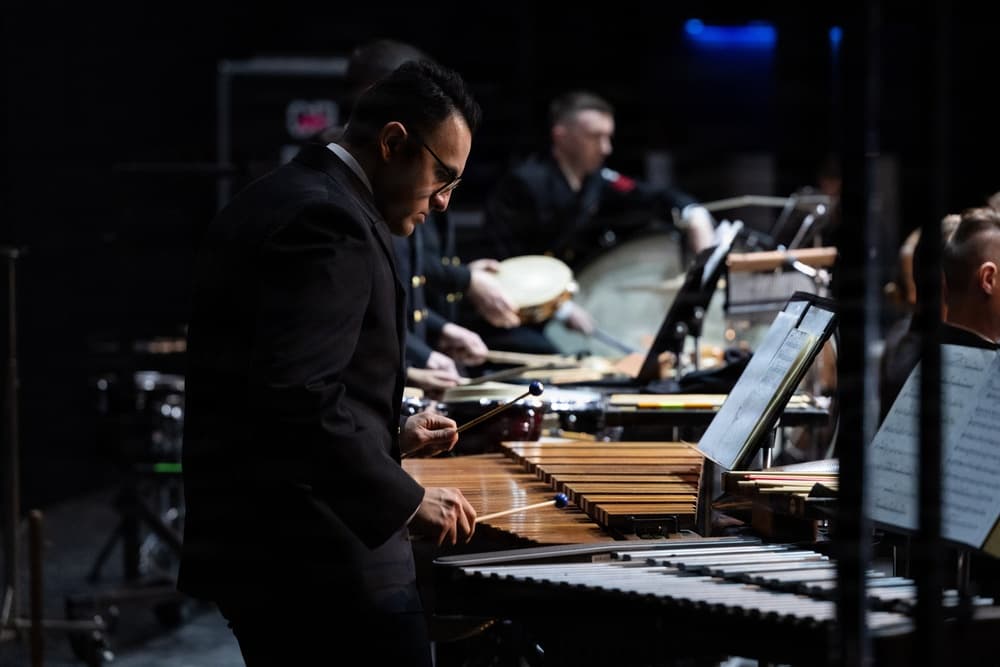
Performs in Navy bands at official ceremonies, concerts, and community outreach events. Requires musical audition.

Overall

5.7/10
Burnout3.2
Lifestyle9.0
Civilian ROI2.1
Happiness8.0
Manning %2.4
$$$ Pay6.0

Quick Stats

Enlistment Bonus$20,000
Civilian Sector Transferability$30k–$60k
Advancement OutlookAverage
Manning %103%
Initial Contract4 yr, 5 yr, 6 yr
Medical RequirementsNone listed

Security Clearance

No Clearance — Open to Permanent Residents

This rate does not require a security clearance and is open to lawful permanent residents (green card holders) as well as U.S. citizens.

ASVAB Requirements

AFQT Minimum

31

Calculate your score →

Remarks

For accession requirements, see reference (b), Volume IV, Chapter 3, Section 12. Selection based on personal auditions. Contact Fleet Band Activities MU Auditions Coordinator for more information concerning lateral conversions at (901)874-4316.

Source: CNRC / ECM Rating List, 19 Jan 2026. Verify current guidance with your recruiter before signing.

Who This Is Best For

Best for talented musicians who want steady pay, travel, and professional performance opportunities while serving. Requires a successful audition — this is for skilled instrumentalists or vocalists who want to maintain their artistic craft within a military framework. One of the rarest and most unique enlisted career paths.

+Pros

  • ✓Active enlistment bonus available
  • ✓Strong civilian career transition

–Cons

    Real Opinions

    +Positive

    ✓

    “I would recommend MU to anyone considering it. The training is solid and the community takes care of its own.”

    r/navy|
    ✓

    “MUs are incredibly talented in a lot of instances. A lot of them come in with deals to make rank fast.”

    Reddit|

    –Negative & Mixed

    ✗

    “Like any rate, MU has its downsides. Long hours, time away from family, and Navy bureaucracy are real.”

    r/newtothenavy|
    ⚬

    “In the Navy Bands just about everyone has either a BS in Education, a BA or BM in performance or a Masters. So the competition is tough.”

    DanSR.com|

    Page 1 of 3

    Share your opinion about MU

    0 chars
    Select one:

    Recruiter vs Reality

    What the recruiter says vs. what it's actually like.

    🫡 Recruiter says

    “The MU rate offers great training and career advancement opportunities!”

    💀 Reality

    Source: MyNavyRates research

    Training and advancement are available but vary by command and manning. Ask specific questions about sea/shore rotation, typical duty stations, and advancement rates for MU.

    🫡 Recruiter says

    “MU has the best quality of life in the Navy.”

    💀 Reality

    Source: sailor forums

    MU is shore-based, regular hours, and genuinely enjoyable work. The trade-off is extremely slow advancement because the rate is tiny. There are very few MU billets in the entire Navy.

    Page 1 of 7

    😱

    Horror Stories

    Real stories people have shared about this rate. Swipe to browse.

    💀

    “MUs are passed over for advancement because they lack sea service time that promotion boards weight heavily. Other sailors resent that MUs receive inflated rank without deployments, quals, or hardship.”

    Source: navymusic.wordpress.com|

    Story 1 of 4

    Share a horror story about MU

    0 chars

    Related Reading

    Guides on picking a rate, ASVAB, bonuses, promotion, and life after the Navy.

    Getting Started

    How do you choose the right Navy rate for you?

    Choosing a Navy rate means weighing your ASVAB scores, lifestyle preferences, civilian career goals, and willingness to deploy or go to sea. Start by identifying which ratings you qualify for, then narrow the list by what matters most to you.

    Getting Started

    What is the ASVAB and what scores do you need?

    The ASVAB is a multi-aptitude test that determines which Navy ratings you qualify for. Your sub-test scores combine into line scores, and each rating has minimum line-score requirements. Higher scores open more options.

    Career & Pay

    Which Navy rates have the biggest enlistment bonuses in 2026?

    Active Component (Active Duty) only. Per the CNRC GENADMIN dated 24 July 2026, the biggest source-rate bonus is $40,000 — Nuclear Field on FY26 ship dates ($75,000 EB cap). Special Warfare Boat Operator (SB) follows at $35,000, then EOD and SEAL (SO) at $30,000, and Aviation Rescue Swimmer (AIRR) and Cryptologic Technician Maintenance (CTM) at $25,000. Special Operations Future Sailors who clear the elevated PST standards add a flat $20,000 EBPST. Most rates cap at $50,000 total EB. The Loan Repayment Program adds up to $65,000 on top, separately. Reserve component (SELRES) bonuses are governed by a different message and are not covered here.

    Real Opinions

    +Positive

    ✓

    “I would recommend MU to anyone considering it. The training is solid and the community takes care of its own.”

    r/navy|
    ✓

    “MUs are incredibly talented in a lot of instances. A lot of them come in with deals to make rank fast.”

    Reddit|

    –Negative & Mixed

    ✗

    “Like any rate, MU has its downsides. Long hours, time away from family, and Navy bureaucracy are real.”

    r/newtothenavy|
    ⚬

    “In the Navy Bands just about everyone has either a BS in Education, a BA or BM in performance or a Masters. So the competition is tough.”

    DanSR.com|

    Page 1 of 3

    Share your opinion about MU

    0 chars
    Select one:

    Recruiter vs Reality

    What the recruiter says vs. what it's actually like.

    🫡 Recruiter says

    “The MU rate offers great training and career advancement opportunities!”

    💀 Reality

    Source: MyNavyRates research

    Training and advancement are available but vary by command and manning. Ask specific questions about sea/shore rotation, typical duty stations, and advancement rates for MU.

    🫡 Recruiter says

    “MU has the best quality of life in the Navy.”

    💀 Reality

    Source: sailor forums

    MU is shore-based, regular hours, and genuinely enjoyable work. The trade-off is extremely slow advancement because the rate is tiny. There are very few MU billets in the entire Navy.

    Page 1 of 7

    😱

    Horror Stories

    Real stories people have shared about this rate. Swipe to browse.

    💀

    “MUs are passed over for advancement because they lack sea service time that promotion boards weight heavily. Other sailors resent that MUs receive inflated rank without deployments, quals, or hardship.”

    Source: navymusic.wordpress.com|

    Story 1 of 4

    Share a horror story about MU

    0 chars

    Training Pipeline — Total ~20 weeks (5 months)

    8w
    12w
    Boot Camp— 8 weeks
    RTC Great Lakes, IL
    Basic military training for all recruits
    A-School— 12 weeks
    Navy School of Music, VA Beach, VA
    6.9% washoutDifficulty: 3.0/10
    Technical training for rating qualification
    Fleet Assignment— 0 weeks
    First duty station
    Report to operational command

    Calculate Your End Training Date and Holidays and Events You Will Miss During Training

    Ship dates are approximate and based on the weekly RTC Great Lakes schedule. Confirm your exact date with your recruiter. Source: bootcamp.navy.mil

    Career Progression Milestones

    Estimated timeline based on current advancement rates. Actual timing varies by individual performance and Navy needs.

    5 mo
    1 mo
    1yr 5mo
    Training Complete— 5 mo
    Pipeline finished (~5 mo) — Navy School of Music, VA Beach, VA
    First Duty Station— 6 mo
    Likely shore duty assignment
    NEC Specialization Options— 1yr 11mo
    21 specializations available
    A01MA02MA03MA04M+ more

    Advancement Outlook

    E-2 to E-4 Advancement Outlook

    Time to E-4: 30 months total

    • E-1 → E-2: 9 months at E-1. Automatic
    • E-2 → E-3: 9 months at E-2. Automatic
    • E-3 → E-4: 12 months at E-3. Automatic

    E-4 is automatic — competitive advancement starts at E-5

    How to advance faster to E-4

    Your recruiter can process you in at E-2 or E-3 on day one if you qualify. Every rung skipped shortens the path to E-4 by months. Official transcripts / certificates required at enlistment.

    • E-2 →Easy
      2 years of JROTC completed. Easiest common path if your high school offers JROTC.
    • E-2 →Moderate
      24+ semester hours/ 36+ quarter hours of college credit (below the associate's threshold). Roughly one full year of college.
    • E-2 →Moderate
      Civil Air Patrol Billy Mitchell Award. Achievable with consistent cadet participation, but requires testing and leadership time.
    • E-2 →Moderate
      Sea Cadet Corps — reaching the Sea Cadet E-2 rate (join by age 17).
    • E-2 to E-3 →Moderate
      Boot camp leadership roles — roles don't auto-pin rank. Advancement comes from earning Honor Recruit or Hall of Fame at graduation (one award only, not stacked).
      • Honor Recruit up to E-2 — effectively the #1 ranked recruit in your division (~60-80 recruits), one Sailor per division per cycle. Selection is based on cumulative performance across all three academic exams, Physical Readiness Test (PRT) scores, uniform and personnel inspections, military bearing, and peer/Recruit Division Commander (RDC) evaluations. Roles that typically compete at this level:
        • Assistant LPO (ALPO) — deputy to the LPO.
        • Master-at-Arms (MAA) — barracks cleanliness, standards, and discipline.
        • Yeoman (YN) — division admin, paperwork, and tracking.
        • Educational Petty Officer (EPO) — study groups, test prep, and academic remediation.
        • Religious Petty Officer (RPO) — coordinates chapel and religious services.
        • Athletic Petty Officer (APO) — leads PT and fitness assessments.
        • Mail Petty Officer — handles mail distribution and tracking.
        • Section Leaders — squad-level leaders below the division-wide roles.
      • Hall of Fame up to E-3 — the most elite recognition at Recruit Training Command (RTC), awarded Navy-wide rather than per division. Requires exceptional performance in every training metric: top-tier scores on all three academic exams (typically 90%+), "Outstanding" on the final Physical Readiness Test (PRT), near-perfect uniform and personnel inspections, held a division leadership role with strong performance, and zero remediation, infractions, or negative marks across the full training cycle. Senior leadership roles positioned to compete:
    • E-3 →Moderate
      3 years of JROTC completed (any service branch). Straightforward if your high school has the program — three school years of enrollment.
    • E-3 →Hard
      Eagle Scout (BSA) or Gold Award (GSUSA) — the highest youth scouting awards. Typically takes years of participation and a capstone service project.
    • E-3 →Hard
      Associate's degree (or 48+ semester hours / 72+ quarter hours of college credit, 100-level or higher from an accredited institution). Two years of full-time college.
    • E-3 →Hard
      Civil Air Patrol Earhart Award. Uncommon — only a small fraction of CAP cadets reach this level.
    • E-3 →Hard
      Sea Cadet Corps — reaching the Sea Cadet E-3 rate (join by age 16).

    Ceiling is E-3 at accession — stacking qualifications doesn't push you to E-4 out of the gate.

    Ways to accelerate E-4 after you're in

    • Very HardMeritorious Advancement Program (MAP) — Command-nominated promotion that skips the exam entirely. Each command gets a small seasonal quota of MAP slots and hands them to the top performers based on evaluation ranking. Fastest path on paper, but you're competing directly with every other sailor at your command.

    Rules can change — verify current criteria with your recruiter and in the latest Navy Recruiting Manual (COMNAVCRUITCOM) before signing any paperwork that assumes a specific entry paygrade.

    E-5 and E-6 Advancement Outlook

    Average★★☆☆

    1 of 4 factors working in your favor · 1 working against you

    • ▼

      Manning

      E5 105%E6 100%(E-5/E-6)
      Community is at or above authorized strength. Limited BBA billet gaps — expect more competition and slower promotion.

      Source: N12 Community Health Indicator brief (FY26)

    • ▲

      Initial Enlistment Bonus

      Yes — active bonus

      The Navy currently pays an enlistment bonus to new recruits who select this rate. An active bonus usually signals the community is short on accessions, which is the same pressure that keeps senior billets open.
    • ●

      Overall Selective Reenlistment Bonus (SRB) Outlook

    Bonuses — Click here to see your military pay

    All Active CNRC Enlistment Incentives

    Active Duty

    Source: CNRC GENADMIN 24 JUL 26 — effective Jul 27, 2026, contracts authorized through Dec 31, 2026 (NDAA 2026)

    Active Component only. Reservist (SELRES) shipping bonuses are set by a separate CNRF incentive message — ask your recruiter.

    Bonuses can stack up to the rating's EB cap; LRP is independent. Footnote numbers match the source GENADMIN.

    Source-Rate Bonus (EBSR)

    Earned at school graduation; only EB type that can be partially recouped.

    MU-SG

    Any

    $20,000[1, 11]

    Shipping Bonus (EBSHP)

    Earned at RTC graduation. Cannot be recouped post-RTC. AFQT ≥ 31 required.

    MU-SG

    27 July FY26 – 30 September FY26

    $20,000[1, 2, 3, 4, 5, 7]

    Loan Repayment Program (LRP)

    Stacks on top of EB cap. AFQT ≥ 50, ~25% tax withheld, DD 2475 required per payment.

    MU-SG

    October–September Any

    Up to $65,000[1]

    EBSR Notes

    • 1See OPNAVINST 1160.9A (the EB Program Instruction) for payment guidance.
    • 11Musician (MU) SG Sailors must attain one of the following NECs: A14M (keyboardist) or A55A (audio engineer).

    EBSHP Notes

    • 1EBSHP eligibility exists only while the FS is in DEP — they may not reclassify at RTC. Earned and payable upon RTC graduation. Cannot be recouped due to post-RTC reclassification or separation.
    • 2NRC classifiers must list EBSHP separately on the NAVCRUIT 1133/52 Enlistment Guarantee.
    • 3EBSHP is intended to fill shipping gaps during the authorized window. Recruiters should not advise FSs to roll out and back in to chase a bonus.
    • 4Future Sailors must have an AFQT score of 31 or higher to be eligible for EBSHP.
    • 5If the Navy itself moves a Sailor's ship date to align with an A-school class convening date, the EBSHP entitlements are preserved on the Annex and SOU.
    • 7FSs scheduled to ship after the designated period who roll into an authorized month, OR who sign a new contract / reclassify into the rating to ship in the designated month(s), are eligible.

    Always verify with a recruiter before signing — eligibility depends on AFQT, education tier, security-clearance adjudication, ship date, and program availability. Funding subject to congressional reauthorization of 37 USC § 331.

    How to qualify & get paid

    1. Sign a contract for this rate at MEPS with the bonus(es) listed on your NAVCRUIT 1133/52 Enlistment Guarantee — eligibility is locked at signing.
    2. Ship to Recruit Training Command (RTC) Great Lakes inside the authorized window — EBSHP and EBPST are earned and paid at RTC graduation and cannot be recouped after.
    3. Complete A-school (and any required follow-on C-school or qualifying course) for your rating — EBSR is earned and paid at school graduation, except for the Special-Operations pipelines, which pay later (AIRR after FRS + first duty station; SO after SQT; SB after SWCC Charlie phase; EOD/ND after their respective A-schools).
    4. LRP is paid annually upon submission of a DD 2475; ~25% is withheld for federal taxes, and a W-2 is issued. LRP must be on your contract at accession — it cannot be added later via reclassification.

    Important details & disqualifiers

    • •All bonuses on this page are Active Component (Active Duty) only. Reservists (SELRES) follow a separate CNRF incentive message — ask your recruiter.
    • •Future Sailors with Tier 3 education credentials (HiSET / GED / alternative) are NOT authorized any EB.
    • •AFQT score must be ≥ 31 for EBSHP and ≥ 50 for LRP.
    • •EBSR is the only EB type that can be partially recouped if you separate before completing the obligated service. EBSHP / EBPST cannot be recouped after RTC.
    • •Bonus payments are subject to federal income tax withholding.
    • •EB-for-High-School (EBHS) is currently NOT authorized in the July 2026 GENADMIN — distinct from earlier cycles when it was offered.
    • •Funding: NDAA 2026 authorizes contracts through 31 December 2026; appropriations cover obligations through 30 September 2026; max-EB authority extends through 10 January 2027 — all subject to congressional reauthorization of 37 USC § 331.

    Historical Bonus Trend by Contract Length

    Past NAVADMIN cycles, broken out by contract years. The current CNRC GENADMIN's source-rate bonus (EBSR) is a single amount per rate and appears above; the four-line chart below shows the older multi-contract structure for trend context only.

    You May Qualify for a Navy Enlisted Classification (NEC)

    Specialties within this rate you can select, some with additional compensation. Each NEC has its own training, bonus potential, and career path.

    A01MFlute/Piccolo Instrumentalist

    Perform duties as instrumentalists on primary and/or secondary instruments as members of authorized Navy bands. Maintain and make minor repairs to assigned musical instruments.

    Requirements

    • Must meet instrumental audition requirements for graduation from applicable course.
    A02MOboe Instrumentalist

    Perform duties as instrumentalists on primary and/or secondary instruments as members of authorized Navy bands. Maintain and make minor repairs to assigned musical instruments.

    Requirements

    • Must meet instrumental audition requirements for graduation from applicable course.
    • Perform on Ceremonial/Parade Band Bass Drum and Cymbals as required/directed.
    A03MClarinet Instrumentalist

    Perform duties as instrumentalists on primary and/or secondary instruments as members of authorized Navy bands. Maintain and make minor repairs to assigned musical instruments.

    Potential Civilian Post-Navy Outcomes

    Professional Musician / Music Director

    Transferability: 4/10

    $30k–$60k

    Post-Navy Salary Trajectory

    Estimated civilian salary growth after separating from the Navy, based on industry data for this rating's skill set.

    Year 1

    $30K

    Year 5

    $45K

    Year 10

    $60K

    10-year growth: +100%

    Retention & Burnout

    First-Term Retention

    75%

    choose to reenlist

    Burnout Index

    3.2/10

    Low Risk

    Watch Intensity

    5

    Hours/Day

    9

    Deploy Tempo

    1

    Manning Strain

    0

    Low Morale Risk

    2

    Attrition Signal

    3

    What this means: The Burnout Index combines watch intensity (25%), daily hours (20%), deployment tempo (15%), manning strain (15%), morale (15%), and attrition (10%) into a single risk score.

    Lifestyle9/10

    Ship vs. Shore Split

    5% / 95%

    Sea Duty Tempo

    Low — 1/10

    Physical Demand

    low — mixed

    Sea Duty Tempo measures how much of a career is spent in deployable billets — ships, submarines, deploying squadrons, and expeditionary units — and how often those units leave homeport. It is separate from physical demand: an administrative job aboard a deployed unit still deploys, and a hands-on maintenance job at a shore command does not.

    Watch Standing

    Standard shore hours, CDO/DCPO rotation when assigned

    Watch standing is a 24-hour duty rotation where sailors take turns manning critical positions aboard the ship or at their command. The rotation determines how frequently you stand watch and how much rest time you get between shifts.

    Watch qualifications vary by command and platform. Expect to qualify within 90 days of reporting.

    OPNAVINST 3120.32DUSNI ProceedingsNavy Watch Standing Manual

    Life on Watch — Sea Stories

    “I was playing trumpet at a memorial ceremony for a fallen sailor at a naval base overseas. Full honors — flag, rifle salute, the works. When I raised the trumpet and played Taps, the entire formation went silent. I could see the family in the front row. My job was to play 24 notes perfectly, because that sailor deserved nothing less. My lips were shaking and I had tears running down my face, but I didn't miss a note. After the ceremony, the sailor's mother hugged me and said 'Thank you for making it beautiful.' MU watch isn't about standing behind a console — it's about honoring people in their most important moments.”

    Veteran account (composite)

    Story 1 of 5

    Common Duty Stations

    Joint Base Anacostia-BollingShore
    Family Friendly

    7.9/10

    Schools + spouse jobs

    Base Housing Wait

    8 months

    Avg waitlist for on-base

    Cost of Living

    160

    100 = national avg

    Joint Base Pearl Harbor-HickamShore
    Family Friendly

    6.6/10

    Schools + spouse jobs

    Base Housing Wait

    18 months

    Avg waitlist for on-base

    Cost of Living

    155

    100 = national avg

    Joint Expeditionary Base Little Creek-Fort StoryShore
    🎓

    Step-by-Step Strategy Guide to Getting an Associate's Degree After Boot Camp — For Free

    Most sailors don't know they already have 9 or more general education college credits just from graduating boot camp.

    Based on your rate, you may have more.

    You can earn an associate's degree for free in 12-30 months without spending a dime.

    Strategy Guide & Boot Camp College Credit Calculator →
    Not the rate for you? See other ratings side by side →

    Talk to a Sailor

    Community Poll

    If you could go back, would you pick MU again?

    Career & Pay

    How does promotion work in the Navy?

    Navy advancement depends on exam scores, evaluations, time in rate, and available quotas. Some ratings promote over 50% of eligible sailors while others promote less than 5%. Your rate choice directly affects how fast you can advance.

    Career & Pay

    Which Navy jobs set you up best for a civilian career?

    Information warfare ratings (IT, CTN, IS) and medical ratings (HM) offer the strongest civilian career pipelines. Security clearances, technical certifications, and hands-on experience make these sailors highly competitive in the private sector.

    Browse all articles →

    Life on Watch — Sea Stories

    “I was playing trumpet at a memorial ceremony for a fallen sailor at a naval base overseas. Full honors — flag, rifle salute, the works. When I raised the trumpet and played Taps, the entire formation went silent. I could see the family in the front row. My job was to play 24 notes perfectly, because that sailor deserved nothing less. My lips were shaking and I had tears running down my face, but I didn't miss a note. After the ceremony, the sailor's mother hugged me and said 'Thank you for making it beautiful.' MU watch isn't about standing behind a console — it's about honoring people in their most important moments.”

    Veteran account (composite)

    Story 1 of 5

    • Leading Petty Officer (LPO) — runs day-to-day ops inside the division.
    • Assistant RCPO (ARCPO) — backs up the RCPO and steps in when needed.
    • Recruit Chief Petty Officer (RCPO) — senior recruit in the division, overall accountability to the RDCs. Highest visibility for meritorious advancement.
    No current SRB
    This rating is not paying a Selective Reenlistment Bonus right now. No retention-pressure signal. Data pulled from the quarterly SRB NAVADMIN.
  • ●

    Billet-Based Advancement eligibility

    Legacy exam cycles

    This rating has not been integrated into Billet-Based Advancement yet. Advancement still runs through the traditional exam and Final Multiple Score (FMS) system — your exam score is one of the main factors in how you promote.Project Compass: Not available for MU — this rating is excluded from the automated billet-recommendation engine. Work directly with your Rating Detailer for assignment guidance.
  • Sources: Manning NAVADMIN · SRB NAVADMIN · Billet-Based Advancement Handbook (NAVADMIN 255/24, updated via NAVADMIN 112/25). How to interpret these factors →

    LRP Notes

    • 1Future Sailor must access into Active Component and have LRP listed as a guarantee on their current Annex to DD Form 4 (NAVCRUIT 1133/52). The NRC LRP Manager approves prior to a new Annex being generated. LRP can stack with all other EB types up to its own $65,000 maximum. Applicants need AFQT 50+, must submit a DD 2475 for each payment, and roughly 25% of each payment is withheld for taxes (a W-2 is issued).

    Cross-cutting Policy Notes

    • 1Future Sailors with Tier 3 education credentials (e.g., HiSET / GED / alternative credential) are NOT authorized any EB.
    • 2Prior-service members re-enlisting onto Active Duty must enter at pay grade E-4 or below, must not have received a bonus on their first enlistment, and (Navy prior-service) must have been separated from active duty for at least 12 months before shipping.
    • 3EBHS (EB for High School) is currently NOT AUTHORIZED in this message — distinct from prior cycles when EBHS was offered.
    • 4During lapsed appropriations, classifiers may still include EB on a contract if the DD 1966 carries the funding-availability disclaimer; payment is then subject to a future appropriation.
    • 5Bonuses are paid in installments. Only the unearned portion of EBSR is eligible for recoupment; EBSHP/EBPST cannot be recouped due to post-RTC reclassification or separation.

    Requirements

    • Must meet instrumental audition requirements for graduation from applicable course.
    A04MBassoon Instrumentalist

    Perform duties as instrumentalists on primary and/or secondary instruments as members of authorized Navy bands. Maintain and make minor repairs to assigned musical instruments.

    Requirements

    • Must meet instrumental audition requirements for graduation from applicable course.
    • Perform on Ceremonial/Parade Band Bass Drum and Cymbals as required/directed.
    A05MSaxophone Instrumentalist

    Perform duties as instrumentalists on primary and/or secondary instruments as members of authorized Navy bands. Maintain and make minor repairs to assigned musical instruments.

    Requirements

    • Must meet instrumental audition requirements for graduation from applicable course.
    A06MTrumpet Instrumentalist

    Perform duties as instrumentalists on primary and/or secondary instruments as members of authorized Navy bands. Maintain and make minor repairs to assigned musical instruments.

    Requirements

    • Must meet instrumental audition requirements for graduation from applicable course.
    A07MFrench Horn Instrumentalist

    Perform duties as instrumentalists on primary and/or secondary instruments as members of authorized Navy bands. Maintain and make minor repairs to assigned musical instruments.

    Requirements

    • Must meet instrumental audition requirements for graduation from applicable course.
    A08MEuphonium Instrumentalist

    Perform duties as instrumentalists on primary and/or secondary instruments as members of authorized Navy bands. Maintain and make minor repairs to assigned musical instruments.

    Requirements

    • Must meet instrumental audition requirements for graduation from applicable course.
    A09MTrombone Instrumentalist

    Perform duties as instrumentalists on primary and/or secondary instruments as members of authorized Navy bands. Maintain and make minor repairs to assigned musical instruments.

    Requirements

    • Must meet instrumental audition requirements for graduation from applicable course.
    A11MTuba Instrumentalist

    Perform duties as instrumentalists on primary and/or secondary instruments as members of authorized Navy bands. Maintain and make minor repairs to assigned musical instruments.

    Requirements

    • Must meet instrumental audition requirements for graduation from applicable course.
    A12MGuitar Instrumentalist

    Perform duties as instrumentalists on primary and/or secondary instruments as members of authorized Navy bands. Maintain and make minor repairs to assigned musical instruments.

    Requirements

    • Must meet instrumental audition requirements for graduation from applicable course.
    • Perform on auxiliary percussion instruments as required/directed.
    A13MPercussion Instrumentalist

    Perform duties as instrumentalists on primary and/or secondary instruments as members of authorized Navy bands. Maintain and make minor repairs to assigned musical instruments.

    Requirements

    • Must meet instrumental audition requirements for graduation from applicable course.
    A14MKeyboard Instrumentalist

    Perform duties as instrumentalists on primary and/or secondary instruments as members of authorized Navy bands. Maintain and make minor repairs to assigned musical instruments.

    Requirements

    • Must meet instrumental audition requirements for graduation from applicable course.
    • Perform on auxiliary percussion instruments as required/directed.
    A15MElectric Bass/String Bass Instrumentalist

    Perform duties as instrumentalists on primary and/or secondary instruments as members of authorized Navy bands. Maintain and make minor repairs to assigned musical instruments.

    Requirements

    • Must meet instrumental audition requirements for graduation from applicable course.
    • Perform on auxiliary percussion instruments as required/directed.
    A53MUnit Leader

    Performs duties as Chief Petty Officer/Petty Officer in Charge of musical unit(s) for authorized Navy bands. Directs, leads, and instructs musical ensembles in rehearsal and performance.

    A54MCeremonial Conductor-Drum Major

    Performs duties as ceremonial conductor and drum major for authorized Navy bands. Conducts and directs the musical and military performance of ceremonial units and parade bands.

    A25MVocalist/Entertainer

    Performs duties as solo/lead vocalist for authorized Navy bands.

    Requirements

    • Must meet vocal audition requirements for graduation from applicable course.
    • Must possess the necessary showmanship and vocal musicianship to perform a wide variety of musical genres at a professional level as part of various ensemble types.
    • Perform on auxiliary percussion instruments as required/directed.
    A51MEnlisted Band Leader

    Performs duties as Senior Enlisted Leader of an official Navy band or other U.S. Navy Music command/activity/unit afloat or ashore. Supervises the performance of assigned personnel and directs daily operation and management of band activities. Also serves in special duty assignment billets as directed, LCPO, and other senior leadership positions.

    A52MArranger

    Performs duties as musical arranger for authorized Navy bands. Develops and writes musical scores/arrangements to meet various performance requirements.

    A55AAudio Engineer

    Designs, configures, maintains and operates live concert audio systems for use in public performances by official Navy bands.

    A55MLive Production Technician

    Designs, configures, maintains and operates live concert sound reinforcement, lighting and production systems for use in public performances by official Navy bands.

    Requirements

    • Personnel must demonstrate technical acumen essential to execution of advanced audio systems and artistic aptitude for delivery of multichannel mixes in all styles of music and have Bandmaster endorsement. At least one year of on-the-job training with a qualified Live Production Technician (legacy Sound Reinforcement Technician) is recommended prior to course assignment. Fleet Band Activities (FBA) will select best qualified candidates to attend the course.
    Family Friendly

    7.1/10

    Schools + spouse jobs

    Base Housing Wait

    6 months

    Avg waitlist for on-base

    Cost of Living

    97

    100 = national avg

    View all stations →

    Real questions from people considering Musician, answered by current and former sailors.

    No questions yet for Musician.

    Be the first to ask!

    0/500

    🖥️ Related Navy Ratings in Infowar

    Other infowar ratings sailors often compare against MU Musician.

    CTICryptologic Technician InterpretiveCTMCryptologic Technician MaintenanceCTRCryptologic Technician CollectionCTTCryptologic Technician TechnicalCWTCyber Warfare TechnicianISIntelligence SpecialistITInformation Systems TechnicianITEInformation Systems Technician Submarines – Electronic WarfareITNInformation Systems Technician Submarines – NetworkITRInformation Systems Technician Submarines – CommunicationsLNLegalmanMCMass Communications SpecialistNCNavy CounselorPSPersonnel SpecialistRPReligious Program SpecialistRWRobotics Warfare SpecialistYNYeomanYNSYeoman – Submarines
    Compare MU side-by-side with these ratings→