 AM
AMAviation Structural Mechanic(AM Navy Rating)
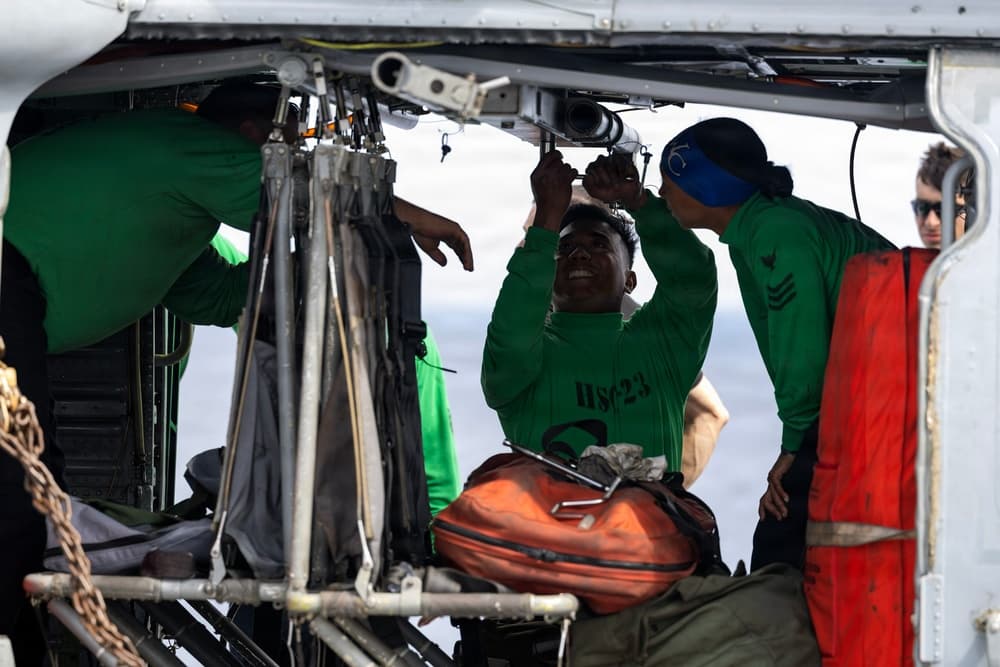
Aviation Structural Mechanics maintain aircraft structures, hydraulic systems, and safety equipment. They repair airframes, perform corrosion control, and maintain ejection seats.
Overall
Quick Stats
- ✓Vision: Corrects to 20/20
- ✓Normal color perception
- ✓Normal hearing
Security Clearance
No Clearance — Open to Permanent Residents
This rate does not require a security clearance and is open to lawful permanent residents (green card holders) as well as U.S. citizens.
ASVAB Requirements
Line-score options — meet any one
- VE+AR+MK+AS≥210
- VE+AR+MK+MC≥210
Who This Is Best For
Best for precision-focused individuals who enjoy detailed fabrication work — welding, riveting, composite repair. If you want FAA-recognized skills that are in high demand by airlines and defense contractors, this rate builds directly transferable trade credentials. Ideal for someone who takes pride in meticulous craftsmanship.
+Pros
- ✓Strong civilian career transition
–Cons
Real Opinions
+Positive
“I would recommend AM to anyone considering it. The training is solid and the community takes care of its own.”
“Composites, sheet metal, hydraulics -- you learn all of it. The hands-on work is satisfying when you see an aircraft fly that you fixed.”
–Negative & Mixed
“Like any rate, AM has its downsides. Long hours, time away from family, and Navy bureaucracy are real.”
“The work can be physically demanding and the chemicals you work with are not great for your health long term.”
Page 1 of 3
Share your opinion about AM
0 charsRecruiter vs Reality
What the recruiter says vs. what it's actually like.
🫡 Recruiter says
“The AM rate offers great training and career advancement opportunities!”
💀 Reality
Source: MyNavyRates researchTraining and advancement are available but vary by command and manning. Ask specific questions about sea/shore rotation, typical duty stations, and advancement rates for AM.
🫡 Recruiter says
“AM is an exciting aviation career.”
💀 Reality
Source: sailor forumsAM is essential but the work is physically demanding. You are working with chemicals, wearing PPE, and doing repetitive repairs. The aircraft are exciting; the daily work is methodical.
Page 1 of 7
Horror Stories
Real stories people have shared about this rate. Swipe to browse.
“Drop-checking the aileron power control module on an F/A-18. I was running a leak test with the system pressurized to 3,000 psi. There was a pinhole leak in the return line I could not see — MIL-H-83282 hydraulic fluid coming out as an invisible stream, thin as a human hair, pencil-length. I wiped my hand across it to feel for the weep. The fluid injected through my index finger like an IV needle. There was no cut. No blood. Just a single white dot on my skin and a feeling like a bee sting that never stopped. Fourteen hours later the finger was black to the second knuckle. Hydraulic injection injuries spread up the fascia like poison — the tissue dies from the inside. They amputated at the wrist. Naval Safety Command's aviation safety bulletins warn about this exact injury every quarter — "do not use hands or fingers to check for leaks" — and every quarter another AM loses a finger or a hand. The entrance wound was smaller than a grain of rice. The loss was my dominant hand.”
Story 1 of 5
Share a horror story about AM
0 charsRelated Reading
Guides on picking a rate, ASVAB, bonuses, promotion, and life after the Navy.
Getting Started
How do you choose the right Navy rate for you?
Choosing a Navy rate means weighing your ASVAB scores, lifestyle preferences, civilian career goals, and willingness to deploy or go to sea. Start by identifying which ratings you qualify for, then narrow the list by what matters most to you.
Getting Started
What is the ASVAB and what scores do you need?
The ASVAB is a multi-aptitude test that determines which Navy ratings you qualify for. Your sub-test scores combine into line scores, and each rating has minimum line-score requirements. Higher scores open more options.
Career & Pay
Which Navy rates have the biggest enlistment bonuses in 2026?
Active Component (Active Duty) only. Per the CNRC GENADMIN dated 24 July 2026, the biggest source-rate bonus is $40,000 — Nuclear Field on FY26 ship dates ($75,000 EB cap). Special Warfare Boat Operator (SB) follows at $35,000, then EOD and SEAL (SO) at $30,000, and Aviation Rescue Swimmer (AIRR) and Cryptologic Technician Maintenance (CTM) at $25,000. Special Operations Future Sailors who clear the elevated PST standards add a flat $20,000 EBPST. Most rates cap at $50,000 total EB. The Loan Repayment Program adds up to $65,000 on top, separately. Reserve component (SELRES) bonuses are governed by a different message and are not covered here.