 AO
AOAviation Ordnanceman(AO Navy Rating)
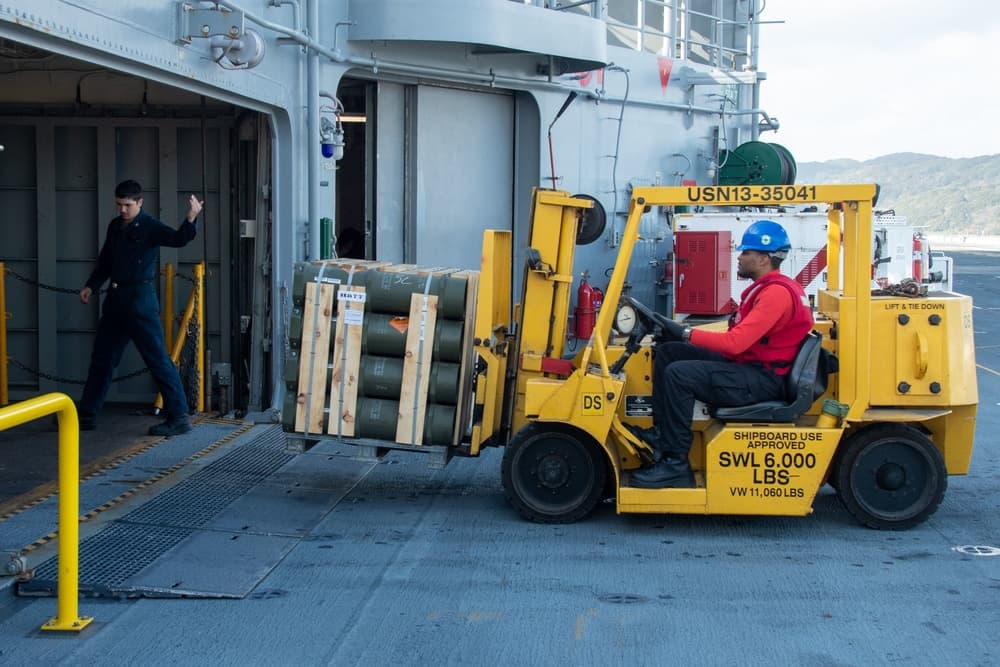
Assembles, tests, and loads weapons and ammunition on Navy aircraft.
Overall
Quick Stats
- ✓Vision: Corrects to 20/20 (uncorrected ≤ 20/100)
- ✓Normal color perception
- ✓Normal hearing
Security Clearance
Secret~$3K–$15K civilian sector value
Requires a National Agency Check with Local Agency Check and Credit Check (NACLC). Processing typically takes 1–3 months and is initiated early in your training pipeline.
ASVAB Requirements
AFQT Minimum
31
Line-score options
Who This Is Best For
Best for physically strong team players who enjoy high-energy, hands-on work and don't mind heavy lifting. If you're drawn to weapons systems and want to be part of the combat punch, this rate delivers daily adrenaline with solid advancement. The work is physically taxing but deeply satisfying for the right personality.
+Pros
- ✓Strong opportunity advancement outlook
- ✓Strong civilian career transition
–Cons
- ✗Significant sea duty
Real Opinions
+Positive
“I would recommend AO to anyone considering it. The training is solid and the community takes care of its own.”
“Tight-knit community, everyone looks out for each other. The camaraderie in the ordnance shop is unmatched.”
–Negative & Mixed
“Like any rate, AO has its downsides. Long hours, time away from family, and Navy bureaucracy are real.”
“Lots of travel with the Navy and great benefits in the long run, but middle managers are inconsistent and often incompetent.”
Page 1 of 3
Share your opinion about AO
0 charsRecruiter vs Reality
What the recruiter says vs. what it's actually like.
🫡 Recruiter says
“The AO rate offers great training and career advancement opportunities!”
💀 Reality
Source: MyNavyRates researchTraining and advancement are available but vary by command and manning. Ask specific questions about sea/shore rotation, typical duty stations, and advancement rates for AO.
🫡 Recruiter says
“AO is one of the most dangerous jobs on the flight deck.”
💀 Reality
Source: sailor forumsFlight deck work is genuinely hazardous, but AO training is extensive and safety protocols are strict. The danger is real but managed through rigorous procedures.
Page 1 of 7
Horror Stories
Real stories people have shared about this rate. Swipe to browse.
“An inadvertent rocket fire aboard USS Forrestal triggered chain-reaction bomb explosions killing 134 sailors and injuring 161. The fire burned 13 hours. Deadliest non-combat naval loss since WWII.”
Story 1 of 6
Share a horror story about AO
0 charsRelated Reading
Guides on picking a rate, ASVAB, bonuses, promotion, and life after the Navy.
Getting Started
How do you choose the right Navy rate for you?
Choosing a Navy rate means weighing your ASVAB scores, lifestyle preferences, civilian career goals, and willingness to deploy or go to sea. Start by identifying which ratings you qualify for, then narrow the list by what matters most to you.
Getting Started
What is the ASVAB and what scores do you need?
The ASVAB is a multi-aptitude test that determines which Navy ratings you qualify for. Your sub-test scores combine into line scores, and each rating has minimum line-score requirements. Higher scores open more options.
Career & Pay
Which Navy rates have the biggest enlistment bonuses in 2026?
Active Component (Active Duty) only. Per the CNRC GENADMIN dated 24 July 2026, the biggest source-rate bonus is $40,000 — Nuclear Field on FY26 ship dates ($75,000 EB cap). Special Warfare Boat Operator (SB) follows at $35,000, then EOD and SEAL (SO) at $30,000, and Aviation Rescue Swimmer (AIRR) and Cryptologic Technician Maintenance (CTM) at $25,000. Special Operations Future Sailors who clear the elevated PST standards add a flat $20,000 EBPST. Most rates cap at $50,000 total EB. The Loan Repayment Program adds up to $65,000 on top, separately. Reserve component (SELRES) bonuses are governed by a different message and are not covered here.