myNavyRates.rg
Home/Compare All Rates/AWO
Donate
Compare All RatesBest ListsQuizPayBonusesASVAB CalculatorAdvancement Name SearchDuty StationsFamily ImpactFree DegreeRecruitersBe an OfficerArticlesFAQs
myNavyRates.rg
Donate

Explore

  • All Rates
  • Side-by-Side
  • Best Lists
  • Articles
  • FAQs

Tools

  • Take the Quiz
  • Anti-Match Quiz
  • ASVAB Calculator
  • Pay
  • Pay Value
  • Bonuses
  • Advancement

Life in the Navy

  • Duty Stations
  • Family Impact
  • Free Degree
  • Be an Officer
  • Recruiters

About

  • About
  • Contact
  • Changelog
  • Donate
  • Privacy
  • Disclaimer
  • Sitemap

Not affiliated with the U.S. Navy or Department of Defense.·© 2026 myNavyRates.org. All rights reserved.

HomeCompare RatesQuizBonusesASVAB CalculatorMore
Home/Rates/AWO
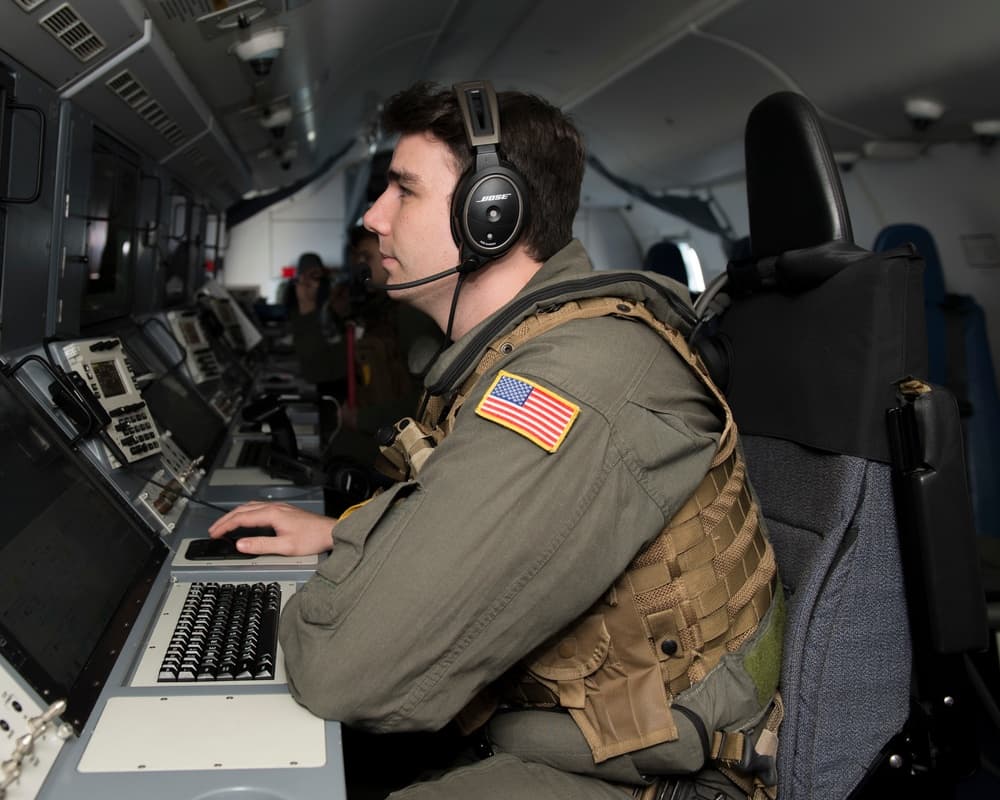
Aircrewman Operator sailor
Aircrewman Operator rating badgeAWO

Aircrewman Operator(AWO Navy Rating)

Operates airborne electronic sensors and communications systems.

ATFAdvanced Technical Field

Overall

4.8/10
Burnout4.7
Lifestyle5.0
Civilian ROI3.9
Happiness6.5
Manning %4.0
$$$ Pay5.7

Quick Stats

Enlistment Bonus$10,000
Civilian Sector Transferability$48k–$75k
Advancement OutlookStrong opportunity
Manning %95%
Initial Contract5 yr active /
Medical Requirements
  • ✓Vision: Corrects to 20/20
  • ✓Normal color perception
  • ✓Normal hearing
  • ✓No speech impediment

Security Clearance

Secret~$3K–$15K civilian sector value

Requires a National Agency Check with Local Agency Check and Credit Check (NACLC). Processing typically takes 1–3 months and is initiated early in your training pipeline.

ASVAB Requirements

AFQT Minimum

50

Who This Is Best For

Best for analytically minded individuals who enjoy technical work, data analysis, and want the thrill of flying combined with intelligence-gathering. Strong intelligence community career prospects make this ideal for someone who wants both excitement and intellectual challenge.

+Pros

  • ✓Active enlistment bonus available
  • ✓Strong opportunity advancement outlook
  • ✓Strong civilian career transition

–Cons

  • ✗Significant sea duty

Real Opinions

+Positive

✓

“Flying is amazing. Aircrew life has its downsides but nothing beats looking out the window on a mission.”

r/navy|
✓

“AWO is the premiere tactical operator role in naval aviation. You operate sensors, radar, and electronic warfare systems on P-8A Poseidons and other maritime patrol aircraft. The mission impact is direct — you are hunting submarines and tracking adversary ships. It feels like a real-world Tom Clancy novel.”

Indeed|

–Negative & Mixed

✗

“The schedule is unpredictable. You could be gone for weeks with little notice. Hard on relationships.”

r/newtothenavy|
✗

“The NACCS pipeline is demanding and not everyone makes it. Once in the fleet, the operational tempo of maritime patrol can be grueling — you deploy frequently to locations like Bahrain, Japan, and Sicily. The time away from home adds up even though the deployments are shorter than carrier rotations.”

Reddit r/navy|

Page 1 of 3

Share your opinion about AWO

0 chars
Select one:

Recruiter vs Reality

What the recruiter says vs. what it's actually like.

🫡 Recruiter says

“You will fly in Navy aircraft and see the world from above!”

💀 Reality

Source: MyNavyRates research

You do fly, but much of your time is spent on ground maintenance, pre-flight checks, and qualifications. Flight schedules can be unpredictable and hard on family life.

🫡 Recruiter says

“AWO is like being a tactical operator.”

💀 Reality

Source: sailor forums

AWO does tactical work during missions but also spends significant time on ground duties, training, and qualifications between flights. The flying is the highlight, not the entirety.

Page 1 of 7

😱

Horror Stories

Real stories people have shared about this rate. Swipe to browse.

💀

“VP-9 P-3C ditched into 30-foot Arctic seas in the Bering Sea after engine fires. 15 sailors escaped into freezing water. Three crew died of exposure before a Soviet fishing trawler rescued survivors. Nobody believed anyone could survive an open-ocean ditching in winter.”

Source: usni.org|

Story 1 of 5

Share a horror story about AWO

0 chars

Related Reading

Guides on picking a rate, ASVAB, bonuses, promotion, and life after the Navy.

Getting Started

How do you choose the right Navy rate for you?

Choosing a Navy rate means weighing your ASVAB scores, lifestyle preferences, civilian career goals, and willingness to deploy or go to sea. Start by identifying which ratings you qualify for, then narrow the list by what matters most to you.

Getting Started

What is the ASVAB and what scores do you need?

The ASVAB is a multi-aptitude test that determines which Navy ratings you qualify for. Your sub-test scores combine into line scores, and each rating has minimum line-score requirements. Higher scores open more options.

Career & Pay

Which Navy rates have the biggest enlistment bonuses in 2026?

Active Component (Active Duty) only. Per the CNRC GENADMIN dated 24 July 2026, the biggest source-rate bonus is $40,000 — Nuclear Field on FY26 ship dates ($75,000 EB cap). Special Warfare Boat Operator (SB) follows at $35,000, then EOD and SEAL (SO) at $30,000, and Aviation Rescue Swimmer (AIRR) and Cryptologic Technician Maintenance (CTM) at $25,000. Special Operations Future Sailors who clear the elevated PST standards add a flat $20,000 EBPST. Most rates cap at $50,000 total EB. The Loan Repayment Program adds up to $65,000 on top, separately. Reserve component (SELRES) bonuses are governed by a different message and are not covered here.

Real Opinions

+Positive

✓

“Flying is amazing. Aircrew life has its downsides but nothing beats looking out the window on a mission.”

r/navy|
✓

“AWO is the premiere tactical operator role in naval aviation. You operate sensors, radar, and electronic warfare systems on P-8A Poseidons and other maritime patrol aircraft. The mission impact is direct — you are hunting submarines and tracking adversary ships. It feels like a real-world Tom Clancy novel.”

Indeed|

–Negative & Mixed

✗

“The schedule is unpredictable. You could be gone for weeks with little notice. Hard on relationships.”

r/newtothenavy|
✗

“The NACCS pipeline is demanding and not everyone makes it. Once in the fleet, the operational tempo of maritime patrol can be grueling — you deploy frequently to locations like Bahrain, Japan, and Sicily. The time away from home adds up even though the deployments are shorter than carrier rotations.”

Reddit r/navy|

Page 1 of 3

Share your opinion about AWO

0 chars
Select one:

Recruiter vs Reality

What the recruiter says vs. what it's actually like.

🫡 Recruiter says

“You will fly in Navy aircraft and see the world from above!”

💀 Reality

Source: MyNavyRates research

You do fly, but much of your time is spent on ground maintenance, pre-flight checks, and qualifications. Flight schedules can be unpredictable and hard on family life.

🫡 Recruiter says

“AWO is like being a tactical operator.”

💀 Reality

Source: sailor forums

AWO does tactical work during missions but also spends significant time on ground duties, training, and qualifications between flights. The flying is the highlight, not the entirety.

Page 1 of 7

😱

Horror Stories

Real stories people have shared about this rate. Swipe to browse.

💀

“VP-9 P-3C ditched into 30-foot Arctic seas in the Bering Sea after engine fires. 15 sailors escaped into freezing water. Three crew died of exposure before a Soviet fishing trawler rescued survivors. Nobody believed anyone could survive an open-ocean ditching in winter.”

Source: usni.org|

Story 1 of 5

Share a horror story about AWO

0 chars

Line-score options — meet any one

  • VE+AR+MK+MC≥210
  • VE+AR+MK+AS≥210
Calculate your score →

Medical Requirements — detail

Normal depth perception. In accordance with reference (e), Article 15-92, applicants must meet the hearing standards for Student Naval Aviator (SNA) (see Aircrew Hearing Standards chart: 500Hz=25dB, 1000Hz=25dB, 2000Hz=25dB, 3000Hz=45dB, 4000Hz=55dB). All applicants will test for "reading aloud" in accordance with reference (e) Article 15-95. Hay fever, asthma, bee sting/food allergy reaction and chronic motion sickness are disqualifying. Normal depth perception required for rescue swimmer.

Remarks

Must volunteer for duty involving aerial flight and be physically qualified and psychologically adapted for flight per reference (e) Article 15-92.

Must be certified as Class II swimmer prior to completion of Recruit Training, with the potential of qualifying as Class I swimmer during AW training. Rescue swimmer and sea-air rescue training included in AW guarantee, therefore, strong swimmers are desired.

In accordance with reference (f), aviation duty minimum and maximum nude body weights are 103 pounds and 245 pounds respectively.

Applicants for aviation programs are held to strict physical standards and therefore are less likely to be recommended for waivers. All waivers to the physical standards for AIRC applicants shall be submitted in accordance with reference (e), Article 15-83.

All AWs will be accessed either as AIRR ATF or AIRC ATF. No drug convictions or drug history other than marijuana or alcohol. For AIRR, the Warrior Challenge Program Manager at Commander, Navy Recruiting Command (NRC N32) may conduct a program eligibility determination for ONE misdemeanor drug abuse conviction (marijuana only) OR a possession of drug paraphernalia (marijuana only). Determinations will be made strictly on a case-by-case basis. Must be 30 years of age or less at time of accession.

Special Lateral Conversion Requirements: Fleet Candidates must be certified as class II swimmer before package submission. Rescue swimmer requirements are physically demanding; therefore, strong swimmers only. No pre-service drug convictions or drug history other than marijuana or alcohol. Must meet all requirements in accordance with MILPERSMAN 1220-010.

Source: CNRC / ECM Rating List, 19 Jan 2026. Verify current guidance with your recruiter before signing.

Training Pipeline — Total ~17 weeks (4 months)

8w
6w
3w
Boot Camp— 8 weeks
RTC Great Lakes, IL
Basic military training for all recruits
A-School— 6 weeks
NATTC Pensacola, FL
8% washoutDifficulty: 2.8/10
Technical training for rating qualification
SERE School— 3 weeks
NAS North Island, CA
Survival, Evasion, Resistance, and Escape training
Fleet Assignment— 0 weeks
First duty station
Report to operational command

Calculate Your End Training Date and Holidays and Events You Will Miss During Training

Ship dates are approximate and based on the weekly RTC Great Lakes schedule. Confirm your exact date with your recruiter. Source: bootcamp.navy.mil

Career Progression Milestones

Estimated timeline based on current advancement rates. Actual timing varies by individual performance and Navy needs.

4 mo
1 mo
1yr 5mo
6 mo
1yr 6mo
Training Complete— 4 mo
Pipeline finished (~4 mo) — NATTC Pensacola, FL
First Duty Station— 5 mo
Likely sea duty assignment
NEC Specialization Options— 1yr 10mo
22 specializations available
G05AG07A

Advancement Outlook

E-2 to E-4 Advancement Outlook

Time to E-4: 30 months total

  • E-1 → E-2: 9 months at E-1. Automatic
  • E-2 → E-3: 9 months at E-2. Automatic
  • E-3 → E-4: 12 months at E-3. Automatic

E-4 is automatic — competitive advancement starts at E-5

How to advance faster to E-4

Your recruiter can process you in at E-2 or E-3 on day one if you qualify. Every rung skipped shortens the path to E-4 by months. Official transcripts / certificates required at enlistment.

  • E-2 →Easy
    2 years of JROTC completed. Easiest common path if your high school offers JROTC.
  • E-2 →Moderate
    24+ semester hours/ 36+ quarter hours of college credit (below the associate's threshold). Roughly one full year of college.
  • E-2 →Moderate
    Civil Air Patrol Billy Mitchell Award. Achievable with consistent cadet participation, but requires testing and leadership time.
  • E-2 →Moderate
    Sea Cadet Corps — reaching the Sea Cadet E-2 rate (join by age 17).
  • E-2 to E-3 →Moderate
    Boot camp leadership roles — roles don't auto-pin rank. Advancement comes from earning Honor Recruit or Hall of Fame at graduation (one award only, not stacked).
    • Honor Recruit up to E-2 — effectively the #1 ranked recruit in your division (~60-80 recruits), one Sailor per division per cycle. Selection is based on cumulative performance across all three academic exams, Physical Readiness Test (PRT) scores, uniform and personnel inspections, military bearing, and peer/Recruit Division Commander (RDC) evaluations. Roles that typically compete at this level:
      • Assistant LPO (ALPO) — deputy to the LPO.
      • Master-at-Arms (MAA) — barracks cleanliness, standards, and discipline.
      • Yeoman (YN) — division admin, paperwork, and tracking.
      • Educational Petty Officer (EPO) — study groups, test prep, and academic remediation.
      • Religious Petty Officer (RPO) — coordinates chapel and religious services.
      • Athletic Petty Officer (APO) — leads PT and fitness assessments.
      • Mail Petty Officer — handles mail distribution and tracking.
      • Section Leaders — squad-level leaders below the division-wide roles.
    • Hall of Fame up to E-3 — the most elite recognition at Recruit Training Command (RTC), awarded Navy-wide rather than per division. Requires exceptional performance in every training metric: top-tier scores on all three academic exams (typically 90%+), "Outstanding" on the final Physical Readiness Test (PRT), near-perfect uniform and personnel inspections, held a division leadership role with strong performance, and zero remediation, infractions, or negative marks across the full training cycle. Senior leadership roles positioned to compete:
  • E-3 →Moderate
    3 years of JROTC completed (any service branch). Straightforward if your high school has the program — three school years of enrollment.
  • E-3 →Hard
    Eagle Scout (BSA) or Gold Award (GSUSA) — the highest youth scouting awards. Typically takes years of participation and a capstone service project.
  • E-3 →Hard
    Associate's degree (or 48+ semester hours / 72+ quarter hours of college credit, 100-level or higher from an accredited institution). Two years of full-time college.
  • E-3 →Hard
    Civil Air Patrol Earhart Award. Uncommon — only a small fraction of CAP cadets reach this level.
  • E-3 →Hard
    Sea Cadet Corps — reaching the Sea Cadet E-3 rate (join by age 16).

Ceiling is E-3 at accession — stacking qualifications doesn't push you to E-4 out of the gate.

Ways to accelerate E-4 after you're in

  • HardAdvanced Technical Field (ATF) ProgramAuto E-4 — AWO is on the ATF roster. Per MILPERSMAN 1510-030 §3a the full ATF list is the Naval Aircrewman service ratings (AWF / AWR / AWS / AWO / AWV), the cryptologic / cyber ratings CTI, CWT, the special-operations ratings EOD, ND, SB, SO, plus IC, IS, IT, the submarine-IT ratings ITE / ITN / ITR, and specific HM advanced NECs (L00A, L02A, L08A, L17A, L24A, L27A, L31A). ATF Sailors advance to E-2 on RTC graduation (§2b), E-3 after 9 months TIG (§9c), and E-4 after A-school + required advanced training + 6 months TIG at E-3 (§9d). Governed by MILPERSMAN 1510-030 (CH-94, 16 Mar 2026) and MILPERSMAN 1430-010. Requirements (§9d):
    • All requirements for advancement in rate completed
    • CO recommendation via NAVPERS 1336/3
    • PFA / body-composition standards (OPNAVINST 6110.1K)
    • Required advanced training complete
    • Sufficient obligated service — ATF carries a 6-year OBLISERV (§7)
    ATF is an enlistment-level election at MEPS / RTC (§2a). Fleet Sailors may request enrollment while at a training activity; conversion into an ATF-only rating auto-enrolls.
  • Very HardMeritorious Advancement Program (MAP) — Command-nominated promotion that skips the exam entirely. Each command gets a small seasonal quota of MAP slots and hands them to the top performers based on evaluation ranking. Fastest path on paper, but you're competing directly with every other sailor at your command.

Rules can change — verify current criteria with your recruiter and in the latest Navy Recruiting Manual (COMNAVCRUITCOM) before signing any paperwork that assumes a specific entry paygrade.

E-5 and E-6 Advancement Outlook

Strong opportunity★★★☆

2 of 4 factors working in your favor · 1 working against you

  • ▼

    Manning

    E5 91%E6 99%(E-4/E-5)
    Community is at or above authorized strength. Limited BBA billet gaps — expect more competition and slower promotion.

    Source: N12 Community Health Indicator brief (FY26)

  • ▲

    Initial Enlistment Bonus

    Yes — active bonus

    The Navy currently pays an enlistment bonus to new recruits who select this rate. An active bonus usually signals the community is short on accessions, which is the same pressure that keeps senior billets open.
  • ▲

    Overall Selective Reenlistment Bonus (SRB) Outlook

Bonuses — Click here to see your military pay

All Active CNRC Enlistment Incentives

Active Duty

Source: CNRC GENADMIN 24 JUL 26 — effective Jul 27, 2026, contracts authorized through Dec 31, 2026 (NDAA 2026)

Active Component only. Reservist (SELRES) shipping bonuses are set by a separate CNRF incentive message — ask your recruiter.

Bonuses can stack up to the rating's EB cap; LRP is independent. Footnote numbers match the source GENADMIN.

Source-Rate Bonus (EBSR)

Earned at school graduation; only EB type that can be partially recouped.

AIRC-ATF

Any

$10,000[2]

EBSR Notes

  • 2EBSR is earned and payable upon graduation from "A" or "C" school.

Cross-cutting Policy Notes

  • 1Future Sailors with Tier 3 education credentials (e.g., HiSET / GED / alternative credential) are NOT authorized any EB.
  • 2Prior-service members re-enlisting onto Active Duty must enter at pay grade E-4 or below, must not have received a bonus on their first enlistment, and (Navy prior-service) must have been separated from active duty for at least 12 months before shipping.
  • 3EBHS (EB for High School) is currently NOT AUTHORIZED in this message — distinct from prior cycles when EBHS was offered.
  • 4During lapsed appropriations, classifiers may still include EB on a contract if the DD 1966 carries the funding-availability disclaimer; payment is then subject to a future appropriation.
  • 5Bonuses are paid in installments. Only the unearned portion of EBSR is eligible for recoupment; EBSHP/EBPST cannot be recouped due to post-RTC reclassification or separation.

Always verify with a recruiter before signing — eligibility depends on AFQT, education tier, security-clearance adjudication, ship date, and program availability. Funding subject to congressional reauthorization of 37 USC § 331.

How to qualify & get paid

  1. Sign a contract for this rate at MEPS with the bonus(es) listed on your NAVCRUIT 1133/52 Enlistment Guarantee — eligibility is locked at signing.
  2. Ship to Recruit Training Command (RTC) Great Lakes inside the authorized window — EBSHP and EBPST are earned and paid at RTC graduation and cannot be recouped after.
  3. Complete A-school (and any required follow-on C-school or qualifying course) for your rating — EBSR is earned and paid at school graduation, except for the Special-Operations pipelines, which pay later (AIRR after FRS + first duty station; SO after SQT; SB after SWCC Charlie phase; EOD/ND after their respective A-schools).
  4. LRP is paid annually upon submission of a DD 2475; ~25% is withheld for federal taxes, and a W-2 is issued. LRP must be on your contract at accession — it cannot be added later via reclassification.

Important details & disqualifiers

  • •All bonuses on this page are Active Component (Active Duty) only. Reservists (SELRES) follow a separate CNRF incentive message — ask your recruiter.
  • •Future Sailors with Tier 3 education credentials (HiSET / GED / alternative) are NOT authorized any EB.
  • •AFQT score must be ≥ 31 for EBSHP and ≥ 50 for LRP.
  • •EBSR is the only EB type that can be partially recouped if you separate before completing the obligated service. EBSHP / EBPST cannot be recouped after RTC.
  • •Bonus payments are subject to federal income tax withholding.
  • •EB-for-High-School (EBHS) is currently NOT authorized in the July 2026 GENADMIN — distinct from earlier cycles when it was offered.
  • •Funding: NDAA 2026 authorizes contracts through 31 December 2026; appropriations cover obligations through 30 September 2026; max-EB authority extends through 10 January 2027 — all subject to congressional reauthorization of 37 USC § 331.
  • •This rate requires a security clearance — failure to obtain clearance may affect bonus eligibility (and several special-operations footnotes explicitly require an earned NEC + clearance before payment).

You May Qualify for a Navy Enlisted Classification (NEC)

Specialties within this rate you can select, some with additional compensation. Each NEC has its own training, bonus potential, and career path.

G07AP-8A Acoustic Systems Specialist Aircrewman

Detects, analyzes, classifies, and tracks surface and subsurface contacts utilizing state-of-the-art technology. Specifically, will operate an advanced sonar system utilizing sonobouys, and advance Electro-Optical and Infrared systems.

Requirements

  • Secret security clearance required with TS/SCI eligibility.
  • NEC code may be awarded via Factory/CADRE training.

Selective Reenlistment Bonus (SRB)

🟢

First Reenlistment (17 mo to 6 yrs Active Duty)

$30,000

Max

Newly Added

🟢

Second Reenlistment (6 to 10 yrs Active Duty)

$30,000

Max

Newly Added

Potential Civilian Post-Navy Outcomes

Drone Operator

Transferability: 6/10

$48k–$75k

Post-Navy Salary Trajectory

Estimated civilian salary growth after separating from the Navy, based on industry data for this rating's skill set.

Year 1

$48K

Year 5

$62K

Year 10

$75K

10-year growth: +56%

Retention & Burnout

First-Term Retention

56%

choose to reenlist

Burnout Index

4.7/10

Moderate

Watch Intensity

5

Hours/Day

9

Deploy Tempo

7

Manning Strain

1

Low Morale Risk

4

Attrition Signal

4

What this means: The Burnout Index combines watch intensity (25%), daily hours (20%), deployment tempo (15%), manning strain (15%), morale (15%), and attrition (10%) into a single risk score.

Lifestyle5/10

Ship vs. Shore Split

60% / 40%

Sea Duty Tempo

High — 7/10

Physical Demand

high — mixed

Sea Duty Tempo measures how much of a career is spent in deployable billets — ships, submarines, deploying squadrons, and expeditionary units — and how often those units leave homeport. It is separate from physical demand: an administrative job aboard a deployed unit still deploys, and a hands-on maintenance job at a shore command does not.

Watch Standing

Flight schedule dependent, rotating duty days

Watch standing is a 24-hour duty rotation where sailors take turns manning critical positions aboard the ship or at their command. The rotation determines how frequently you stand watch and how much rest time you get between shifts.

Watch qualifications vary by command and platform. Expect to qualify within 90 days of reporting.

OPNAVINST 3120.32DUSNI ProceedingsNavy Watch Standing Manual

Life on Watch — Sea Stories

“I was on a P-8A mission over the South China Sea operating the multi-static sonar system when we got a real-world tasking to prosecute a submerged contact. We dropped a pattern of sonobuoys and I started building the acoustic picture. For three hours, I tracked that contact while our crew coordinated with a surface ship and another P-8. The contact turned out to be exactly what we suspected. I can't say more, but watching the sonobuoy symbology on my screen match up with what we'd trained for a thousand times — except this time it was real — that's what being an AWO is about.”

Veteran account (composite)

Story 1 of 4

Common Duty Stations

Naval Station NorfolkSea
Family Friendly

6.9/10

Schools + spouse jobs

Base Housing Wait

10 months

Avg waitlist for on-base

Cost of Living

95

100 = national avg

Naval Base San DiegoSea
Family Friendly

7.9/10

Schools + spouse jobs

Base Housing Wait

14 months

Avg waitlist for on-base

Cost of Living

135

100 = national avg

Naval Station JacksonvilleShore
🎓

Step-by-Step Strategy Guide to Getting an Associate's Degree After Boot Camp — For Free

Most sailors don't know they already have 9 or more general education college credits just from graduating boot camp.

Based on your rate, you may have more.

You can earn an associate's degree for free in 12-30 months without spending a dime.

Strategy Guide & Boot Camp College Credit Calculator →
Not the rate for you? See other ratings side by side →

Talk to a Sailor

Community Poll

If you could go back, would you pick AWO again?

Career & Pay

How does promotion work in the Navy?

Navy advancement depends on exam scores, evaluations, time in rate, and available quotas. Some ratings promote over 50% of eligible sailors while others promote less than 5%. Your rate choice directly affects how fast you can advance.

Career & Pay

Which Navy jobs set you up best for a civilian career?

Information warfare ratings (IT, CTN, IS) and medical ratings (HM) offer the strongest civilian career pipelines. Security clearances, technical certifications, and hands-on experience make these sailors highly competitive in the private sector.

Browse all articles →

Life on Watch — Sea Stories

“I was on a P-8A mission over the South China Sea operating the multi-static sonar system when we got a real-world tasking to prosecute a submerged contact. We dropped a pattern of sonobuoys and I started building the acoustic picture. For three hours, I tracked that contact while our crew coordinated with a surface ship and another P-8. The contact turned out to be exactly what we suspected. I can't say more, but watching the sonobuoy symbology on my screen match up with what we'd trained for a thousand times — except this time it was real — that's what being an AWO is about.”

Veteran account (composite)

Story 1 of 4

G09A
G10A
+ more
C-School / Advanced Training— 2yr 4mo
2 follow-on schools available
Shore Duty Rotation— 3yr 10mo
First shore rotation opportunity
  • Leading Petty Officer (LPO) — runs day-to-day ops inside the division.
  • Assistant RCPO (ARCPO) — backs up the RCPO and steps in when needed.
  • Recruit Chief Petty Officer (RCPO) — senior recruit in the division, overall accountability to the RDCs. Highest visibility for meritorious advancement.
Strong opportunity+3 SRB added/increased · −1 SRB reduced/eliminated
$30,000 max
Navy is paying a substantial bonus to retain sailors. Strong signal that billets are staying empty at senior paygrades.
  • ●

    Billet-Based Advancement eligibility

    Legacy exam cycles

    This rating has not been integrated into Billet-Based Advancement yet. Advancement still runs through the traditional exam and Final Multiple Score (FMS) system — your exam score is one of the main factors in how you promote.
  • Sources: Manning NAVADMIN · SRB NAVADMIN · Billet-Based Advancement Handbook (NAVADMIN 255/24, updated via NAVADMIN 112/25). How to interpret these factors →

    —

    Third Reenlistment (10 to 14 yrs Active Duty)

    Not eligible

    G09AP-8A Electronic Warfare Operator Aircrewman

    Detects, analyzes, classifies, and tracks surface and subsurface contacts utilizing state-of-the-art technology. Operates RADAR, Electronic Support Measures, Identification Friend or Foe Interrogator, and Advanced Electro-Optics and Infrared Sensors.

    Requirements

    • Secret security clearance required with TS/SCI eligibility.
    • NEC code may be awarded via Factory/CADRE training.

    Selective Reenlistment Bonus (SRB)

    🟢

    First Reenlistment (17 mo to 6 yrs Active Duty)

    $30,000

    Max

    Newly Added

    🟡

    Second Reenlistment (6 to 10 yrs Active Duty)

    $30,000

    Max

    Reduced · effective 2025-12-18

    —

    Third Reenlistment (10 to 14 yrs Active Duty)

    Not eligible

    G05AMaritime Intelligence, Surveillance, Reconnaissance (MISR) Weapons and Tactics Instructor (WTI)

    Provides expertise in Intelligence, Surveillance, Reconnaissance (ISR) asset/sensor planning, coordination, and management across multiple platforms and warfighting domains.

    Requirements

    • TS/SCI adjudicated clearance and Special Access Program security eligibility clearance required to earn this NEC code.
    G10AAdvanced Airborne Sensor, Sensor Operator

    Provides system health and resource management, troubleshooting, exploitation, mission planning assistance for Anti-Submarine Warfare, Surface Warfare, ISR&T and coordinated operations. Knowledgeable of all mission sensors and their tactical employment; and is capable of incorporating advanced warfare concepts in the development of preplanned responses.

    Requirements

    • Member must possess a Secret security clearance at a minimum.
    • Member must complete the ACTC level 300 PQS for the Advanced Airborne Sensor to earn this NEC code. 67
    G31AMQ-8B/C Air Vehicle Operator (AVO)

    Develops and inputs Air Vehicle flight plan. Directs, monitors, and provides input changes to Air Vehicle in-flight.

    Requirements

    • NEC may be awarded through cadre training pending establishment of formal training.
    • Flight Physical must be completed prior to arrival in accordance with aero-medical reference and waiver guide and NAVMED P117.
    • Physical Qualification-Class Two Physical.
    G65AMQ-4C Multi-Intelligence Mission Payload Operator (MPO)

    Operates RADAR, Electro-Optic, Infrared Sensors and SIGINT/ELINT payload sensors related to MQ-4C Triton Unmanned Aircraft System (UAS) and provides recommendations regarding UA position for sensor optimization.

    Requirements

    • Member must possess a TS/SCI with polygraph (or at least eligibility) security clearance.
    • Member must maintain documentation currency of completing medical clearance notice (NAVMED 6410/2) to possess this NEC code.
    702AUnmanned Aerial Vehicle (UAV) Payload Operator

    Operates the EO/IR UAV sensor during all phases of flight.

    709BJourneyman Level Acoustic Analyst

    Classifies surface and subsurface contacts by class and distinguishes between class variants utilizing visual and aural indications of major, minor and transient sound sources and active emissions in a multiple contact environment; interprets indirect and inferred relationships, modulation structures, resonance component and target behavior characteristics; recognizes friendly and threat weapons s

    Requirements

    • NEC code G07A is a requirement for AWO personnel only. Personnel will retain NEC code G07A upon being awarded NEC code 709B.
    • Awarding of this NEC code for Source Rating AW (E9) only applies to SELRES personnel.
    712BIntegrated Undersea Surveillance System (IUSS) Master

    Conducts in-depth acoustic analysis, multiple ASW platform integration and data fusion. Conducts mission planning and performs contact evaluation based on acoustic contacts from Fixed Surveillance System (FSS), Mobile Surveillance System (MSS) and Deployable Surveillance System (DSS) at IUSS facilities.

    Requirements

    • Member must have completed 48 months of IUSS System experience, the IUSS Journeyman Pipeline, qualified as IUSS Tactical Coordinator (Sea/Shore), and a designated IUSS USL04 Signer prior to being assigned to a billet with this NEC code.
    • Personnel must successfully complete OJT at an IUSS facility for award of this NEC code.
    • In addition to prerequisite qualifications, member must have completed the IUSS Master Qualification Card.
    • Submission of NAVPERS 1221/6 to BUPERS-312 requesting NEC code will be required.
    713BAN/SQQ-34C (V) 2 Aircraft Carrier Tactical Support Center (CV-TSC) Operator

    Supports the Anti-Submarine Warfare mission warfare area, through utilization of the tactical and sensor functions of the AN/SQQ-34 (V) 2 system and supporting peripheral equipment. Performs AN/SQQ-34C (V) 2 set-up and configuration based on mission task.

    Requirements

    • Secret Security Clearance required.
    • NEC code may be awarded to individuals who have completed AN/SQQ-34V2 In-Service Engineering Agent Factory Training.
    • Awarding of this NEC code for Source Rating AW (E9) only applies to SELRES personnel.
    714BIntegrated Undersea Surveillance System (IUSS) Apprentice)

    Conducts broad ocean surveillance for ocean-borne acoustics and conducts contact detection, initial analysis, classification, positioning, and reporting on surfaced and submerged contacts detected using Fixed Undersea Surveillance System and Surveillance Towed Array Sensor System (SURTASS) sensors.

    Requirements

    • Secret or Top Secret security clearance required based on UIC assigned.
    • NEC code was previously awarded by completing prerequisite CIN: A-130-0503. Personnel who previously earned this NEC code based on completing CIN: A-130-0503 will retain the NEC code.
    • Commanding Officers of IUSS commands can request NEC code assignment based on OJT if mandatory course has not been completed. Commander Undersea Surveillance will approve the Commanding Officers request.
    715BIntegrated Undersea Surveillance System (IUSS) Journeyman

    Performs supervisory tasks related to the detection, analysis, localization, and reporting of ocean-borne acoustics on the Fixed Undersea Surveillance System (FSS) and SURTASS sensors. Specific tasks include Target Motion Analysis (TMA) and track development, multi-sensor correlation, mission planning, and Quality Assurance/contact reconstruction.

    Requirements

    • Personnel must have successfully qualified as IUSS Tracker Reporter prior to attending course.
    • Secret or Top Secret security clearance required based on UIC assigned.
    • Commanding Officers of IUSS commands can request NEC code assignment based on OJT if mandatory course has not been completed. Commander Undersea Surveillance will approve the Commanding Officers request.
    • Members who previously earned this NEC code as a result of completing CIN: A-130-0505 will retain the NEC code.
    • Member must complete the pipeline or all five segment courses is required for awarding this NEC Code. CINs: A-130-0521, A-130-0522, A-130- 0523 and A-130-0524 may be taken in any order; CIN: A-130-0525 must be taken as the final course in the pipeline.
    723AAviation Electronic Warfare (EW) Operator

    Operates EW equipment in P-3, P-8, MQ-4C, and EP-3 aircraft.

    749BMain Propulsion Steam Generating Plant Inspector

    Inspects material condition, monitors general readiness, and diagnoses improper operating procedures and equipment casualties/failures. Recommends operations and maintenance corrective measures.

    Requirements

    • Member must be mission-qualified flight crew member (E4 or above; mission qualification granted by the parent command) and have at least 18 months remaining on current PCS tour upon completion of CRMIT.
    • Must submit NAVPERS 1221/6 with Commanding Officer's recommendation to BUPERS-312 for awarding of this NEC code.
    757EMQ-4C Unmanned Aircraft System (UAS) Mission Payload Operator

    Manages state-of-the-art technology and tracks surface contacts as part of the MQ-4C UAS. Operates radar, Electronic Support measures, and Advanced Electro-optics and Infrared Sensor systems. Performs aircrew duties that support mission planning, classified material handling and training that contributes directly to a squadron's ability to conduct tactical operations worldwide.

    Requirements

    • Secret security clearance required with TS/SCI eligibility.
    • Personnel will retain Component NEC for follow-on sea duty requirements.
    • Component NEC prerequisite not required for Source Rating RW personnel to attend prerequisite CIN training.
    757FMQ-8B/C Mission Payload Operator (MPO)

    Operates MQ-8B/C mission payload during flight.

    Requirements

    • NEC may be awarded through cadre training pending establishment of formal training.
    • Flight Physical must be completed prior to arrival in accordance with aero-medical reference and waiver guide and NAVMED P117.
    • Physical Qualification-Class Two Physical.
    776ANaval Aircrewman (Special Assignment)

    Performs in-flight duties as assigned in support of command mission.

    Requirements

    • Personnel assigned to this DNEC are assigned to BUPERS designated special billets with joint services, foreign services and special assignments where USN coding is not applicable.
    • This NEC is assigned as a distributive NEC only to personnel by BUPERS and billets may be coded only with prior BUPERS concurrence.
    • The use, applicability and retention of this NEC are of a restricted nature.
    • The goal is to prevent entry level naval aircrewmen assigned to these billets from trying to earn aircrew designation without complying with the requirements established for all naval aircrewmen.
    • Joint airborne command post personnel assigned to USSTRATCOM are also eligible to be awarded NEC code 776A with Commanding Officer's endorsement. NEC code may be awarded after completion of one year as a qualified airborne battlestaff crewmember. This NEC code may be awarded to personnel in other ratings but will not be used to identify additional Source Ratings on billets.
    777AWeapons and Tactics Instructor

    Performs in an instructor billet at Weapons Schools, Type Wings, and Aviation Squadrons within the classroom, lab/simulator, or during training flights. Performs in flight duties as an Aircrewman, Instructor, and Evaluator. Rotary wing and Airborne Command Control and Logistics aircrew perform in-flight duties as an Aircrewman, Instructor, and Evaluator.

    Requirements

    • All aircrew attending prerequisite courses must be in an UP status for flying, must be NATOPS current and qualified in model.
    • "Rotary Wing" CIN: S-050-0836 required for AWR and AWS only. Candidates must be ACTC Level III, meet NAWDC minimum flight time requirements, and pass instructor screening. Through training process, instructor will qualify as range Safety Officer for training events, as well as Small Arms Marksmanship Instructors (SAMI) and Aerial Gunnery Instructors (AGI).
    • "VP" candidates for the MPRA WTI course must be ACTC Level IV; graduates will be identified as WTI/ACTC Level 500 instructors.
    • "VQ/VPU" candidates for the Reconnaissance Tactics Instructor Course (RTIC) must be ACTC Level IV; graduates will be identified as WTI/ACTC Level 500 instructors.
    • "VQ(T)" candidates for the Mercury Tactics Instructor Course (MTIC) must be ACTC Level 400; graduates will be identified as WTI/ACTC Level 500 instructors. SAMI and HAGI are not required for VQ(T) ACTC 500 Aircrewmen.
    • "VRC/VRM" candidates for the Combat Logistics Instructor (CLI) Course in the C-2A or CMV-22 must complete the Combat Logistics Systems course, COD Advanced Readiness Program, Navy Instructor Training Course (NITC), and ACTC Level IV. Graduates will be identified as CLI/ACTC Level 500 instructors.
    785ISpecial Operations Forces (SOF) Advanced Technical Systems Operator (ATSO)

    Performs full-spectrum advanced technical system operations support as assigned in support of SOF mission-sets. When augmented to Joint Task Forces (JTFs), operationally leverages advanced technical systems and capabilities in the maritime, air, ground, and space domains.

    Requirements

    • Member must possess a TS/SCI security clearance.
    • Member must be assessed and selected for special duty assignment to a CNO Priority One Command.
    • Member must complete JSOC ATSOTC.
    • Member will retain all previously earned NEC codes upon awarding of this NEC. 274
    788AAcquisition Specialist

    Perform critical functions within acquisition type activities (i.e., Integrated Logistics Support (ILS), Naval Air Training Management Support Activity (NATMSACT) as defined in DoD Directive 5000.1 and DoD Instruction 5000.2.

    Requirements

    • NEC code awarded after one year of acquisition billet service, and completion of the currently published Defense Acquisition University (DAU) courses for Defense Acquisition Workforce Improvement Act (DAWIA) foundational certification in Lifecycle Logistics (LCL) and/or Test & Evaluation (T&E).
    • DAWIA training courses are obtained and funded for Navy personnel through the Defense Acquisition Talent Management (DATM) Office via the DON Acquisition Training Registrar, Naval Acquisition Career Management Center, 5450 Carlisle Pike, P.O. Box 2033, Mechanicsburg, PA 17055 using quotas that are assigned to the requesting command. Individuals must be currently in or ordered to an identified Acquisition billet.
    795ATacMobile Systems Operator

    Performs Tactical Operations Center (TOC) and Mobile Tactical Operations Center (MTOC) operations through utilization of tactical display, environmental, acoustic, non-acoustic and associated equipment with an emphasis on operational application in support of P-3C, P-8 Poseidon, MQ-4 Triton and associated family of systems. Uses TOC/MTOC analysis equipment and tactical displays.

    Requirements

    • Secret security clearance required.
    • Component NEC prerequisite not required for Source Rating RW personnel to attend prerequisite CIN training.
    795BTacMobile Watch Officer

    Provides leadership and management control of Maritime Patrol and Reconnaissance Aircraft Weapon Systems Tactical Operations Center (TOC); Mobile Tactical Operations Center (MTOC) operational watch teams through employment of unique Command, Control, Communications, Computers; Intelligence (C4I) Systems and techniques which will assist Task Group Commanders (TGCs) in planning and executing assigne

    Requirements

    • SELRES and FTS personnel may earn this NEC code by attending either TSC/MOCC Watch Officer R-2G-6003 or TSC Watch Officer J-2G-0367.
    • Secret security clearance required.
    • Component NEC prerequisite not required for Source Rating RW personnel to attend prerequisite CIN training.
    Family Friendly

    6.8/10

    Schools + spouse jobs

    Base Housing Wait

    8 months

    Avg waitlist for on-base

    Cost of Living

    92

    100 = national avg

    View all stations →

    Real questions from people considering Aircrewman Operator, answered by current and former sailors.

    No questions yet for Aircrewman Operator.

    Be the first to ask!

    0/500

    ✈️ Related Navy Ratings in Aviation

    Other aviation ratings sailors often compare against AWO Aircrewman Operator.

    ABEAviation Boatswain's Mate - Launch & RecoveryABFAviation Boatswain's Mate FuelsABHAviation Boatswain's Mate HandlingACAir Traffic ControllerADAviation Machinist's MateAEAviation Electrician's MateAGAerographer's MateAMAviation Structural MechanicAMEAviation Structural Mechanic – EquipmentAOAviation OrdnancemanASAviation Support Equipment TechnicianATAviation Electronics TechnicianAWNaval AircrewmanAWFAircrewman HelicopterAWRAircrewman Tactical HelicopterAWSAircrewman HelicopterAWVAircrewman AvionicsAZAviation Maintenance AdministrationmanPRAircrew Survival Equipmentman
    Compare AWO side-by-side with these ratings→