 AW
AWNaval Aircrewman(AW Navy Rating)
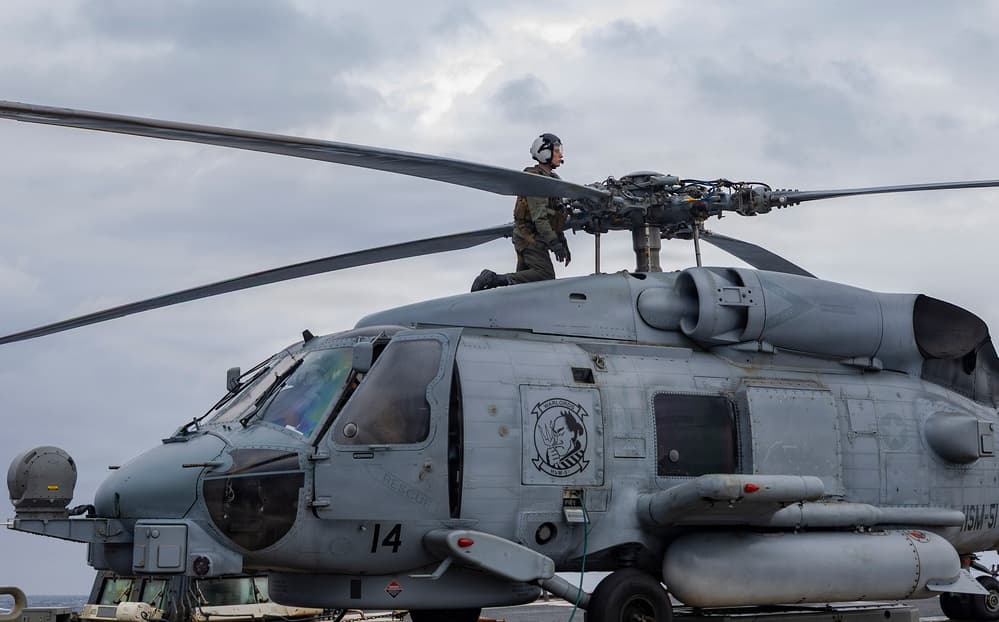
Naval Aircrewmen operate airborne electronic sensors, weapons systems, and communications equipment during flight. Multiple specialties: helicopter, patrol, and carrier-based.
Parent rating. AW (Naval Aircrewman) is an umbrella rating consisting of five service-rating sub-specialties. New Aircrewmen select their service rating during training based on aircraft platform and mission. Each sub-rating has its own manning profile, advancement outlook, SRB, and career path — see the linked profile for details:
Overall
Quick Stats
- ✓Vision: Corrects to 20/20
- ✓Normal color perception
- ✓Normal hearing
- ✓No speech impediment
Security Clearance
Secret~$3K–$15K civilian sector value
Requires a National Agency Check with Local Agency Check and Credit Check (NACLC). Processing typically takes 1–3 months and is initiated early in your training pipeline.
ASVAB Requirements
Line-score options — meet any one
Who This Is Best For
Best for adventurous individuals who want flight pay, travel, and a rating where no two days are the same. Multiple specialties let you choose between helicopters, patrol aircraft, and carrier-based platforms. If you want to actually fly rather than just work on aircraft, this is one of the most exciting rates available — ideal for those who crave variety and mission diversity.
+Pros
- ✓Strong civilian career transition
–Cons
- ✗Significant sea duty
Real Opinions
+Positive
“Best rate in the Navy hands down. You actually fly and get flight pay. The missions are exciting and every day is different.”
“Being an aircrewman gave me experiences most people only dream about. SAR missions, anti-submarine warfare, seeing the world from the air.”
–Negative & Mixed
“The schedule is unpredictable. You could be gone for weeks with little notice. Hard on relationships.”
“The aircrew pipeline washes out a significant percentage of candidates, and if you fail, you get reclassified to a rate you didn't choose — often needs of the Navy. The NACCS training is physically and mentally demanding. Not everyone who wants to be aircrew makes it, and the fallback options are not great.”
Page 1 of 3
Share your opinion about AW
0 charsRecruiter vs Reality
What the recruiter says vs. what it's actually like.
🫡 Recruiter says
“You will fly in Navy aircraft and see the world from above!”
💀 Reality
Source: MyNavyRates researchYou do fly, but much of your time is spent on ground maintenance, pre-flight checks, and qualifications. Flight schedules can be unpredictable and hard on family life.
🫡 Recruiter says
“AW gets flight pay.”
💀 Reality
Source: sailor forumsTrue, AW receives hazardous duty incentive pay for flying. But you also face flight physicals, swim qualifications, water survival training, and the risk inherent in military aviation.
Page 1 of 7
Horror Stories
Real stories people have shared about this rate. Swipe to browse.
“The AW pipeline has a 22% graduation rate — roughly 78% wash out. If you drop on request you go undesignated with no rate. Many recruits who signed AW contracts end up stuck in rates they never wanted.”
Story 1 of 4
Share a horror story about AW
0 charsRelated Reading
Guides on picking a rate, ASVAB, bonuses, promotion, and life after the Navy.
Getting Started
How do you choose the right Navy rate for you?
Choosing a Navy rate means weighing your ASVAB scores, lifestyle preferences, civilian career goals, and willingness to deploy or go to sea. Start by identifying which ratings you qualify for, then narrow the list by what matters most to you.
Getting Started
What is the ASVAB and what scores do you need?
The ASVAB is a multi-aptitude test that determines which Navy ratings you qualify for. Your sub-test scores combine into line scores, and each rating has minimum line-score requirements. Higher scores open more options.
Career & Pay
Which Navy rates have the biggest enlistment bonuses in 2026?
Active Component (Active Duty) only. Per the CNRC GENADMIN dated 24 July 2026, the biggest source-rate bonus is $40,000 — Nuclear Field on FY26 ship dates ($75,000 EB cap). Special Warfare Boat Operator (SB) follows at $35,000, then EOD and SEAL (SO) at $30,000, and Aviation Rescue Swimmer (AIRR) and Cryptologic Technician Maintenance (CTM) at $25,000. Special Operations Future Sailors who clear the elevated PST standards add a flat $20,000 EBPST. Most rates cap at $50,000 total EB. The Loan Repayment Program adds up to $65,000 on top, separately. Reserve component (SELRES) bonuses are governed by a different message and are not covered here.